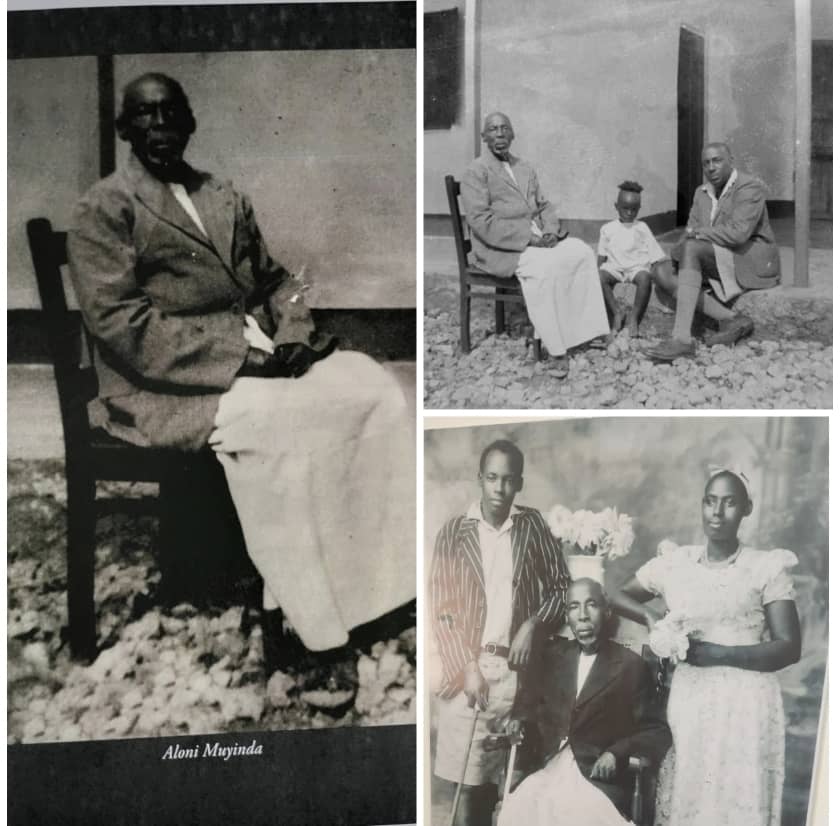
 FROM SLAVE BOY TO PRIEST: The 3-Year-Old Slave Captured In Mpororo Who Became The Father Of The East African Revival. Rev. Aloni Muyinda.
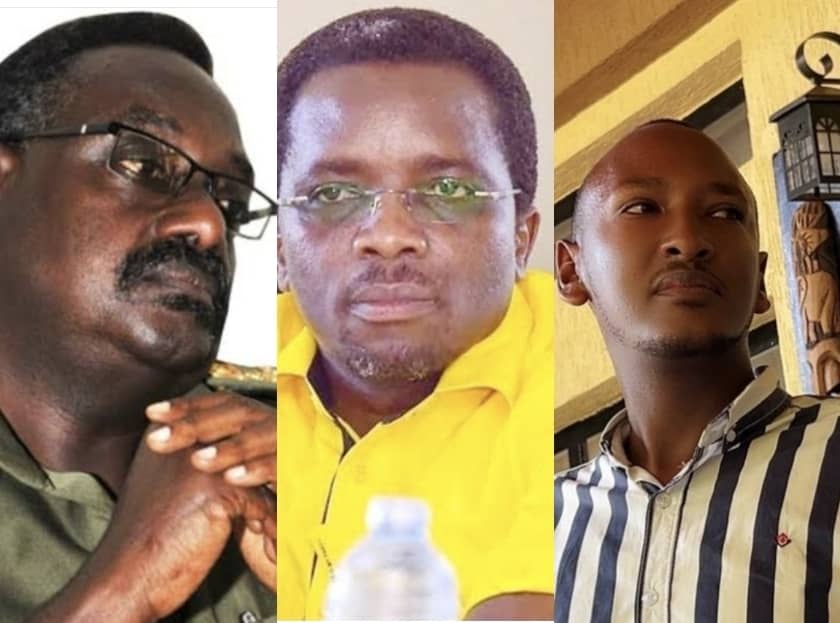 GEN. SEJUSA, KAVIIRI AND OMONA Clash Over Balaalo Identity. Its an occupation, not a tribe.
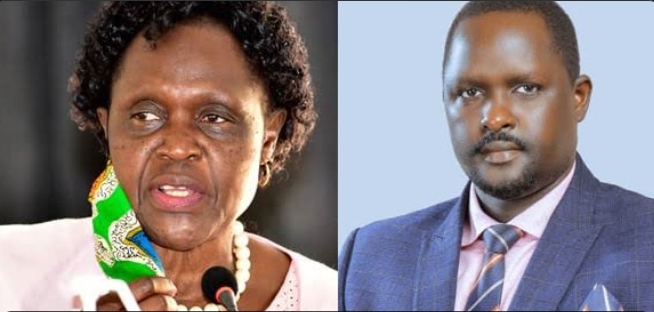
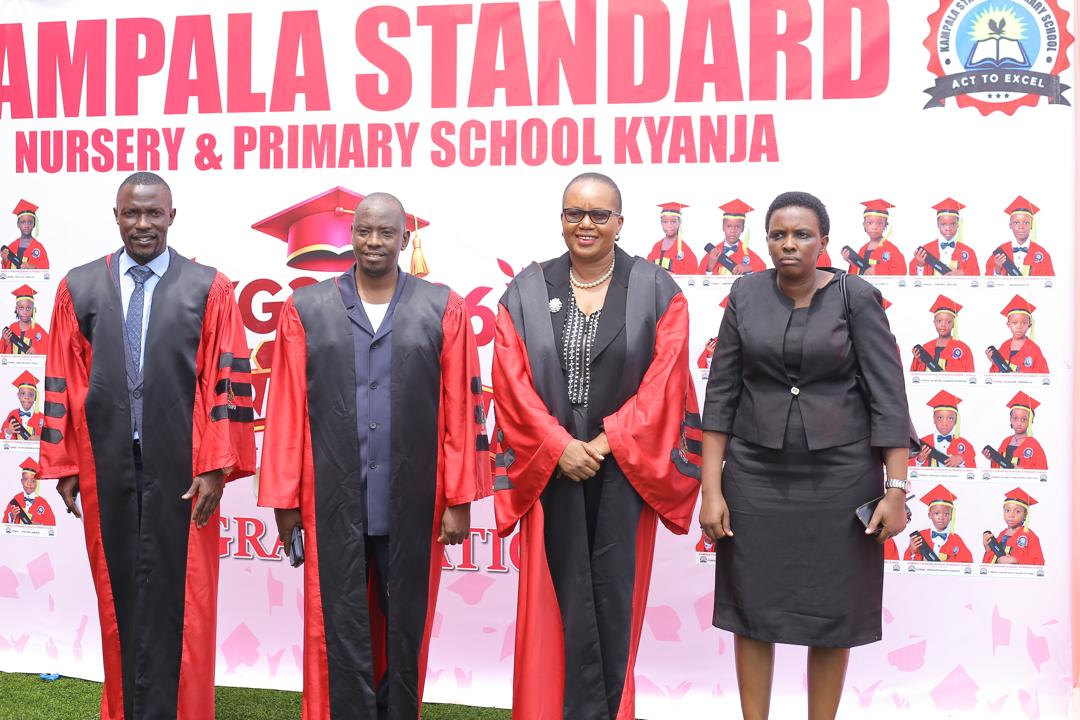 HON MINISTER LYDIA WANYOTO, HON. JAMES KABERUKA ENCOURAGE KAMPALA PARENTS TO TAKE LEARNERS TO KAMPALA STANDARD NURSERY AND PRIMARY SCHOOL KYANJA FOR HOLISTIC LEARNING EXPERIENCE.
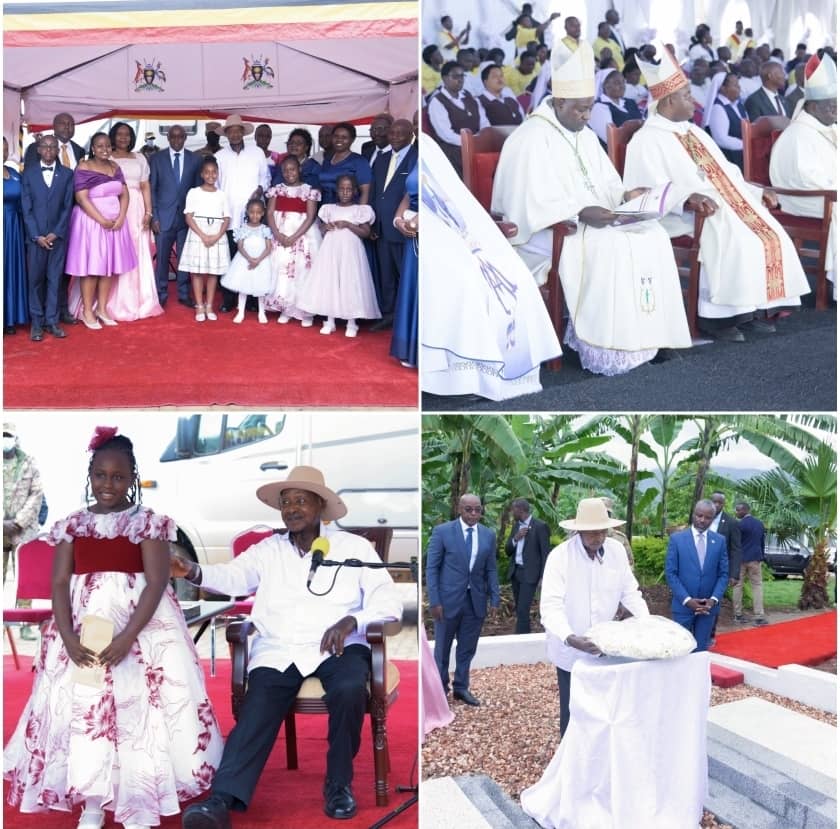 BOY FROM THE HILLS OF NYARUSHANJE NOW CHIEF JUSTICE: Zeija Thanks God, Museveni. H.E MUSEVENI TO KIGEZI: Education Must Go Hand In Hand With Wealth Creation.
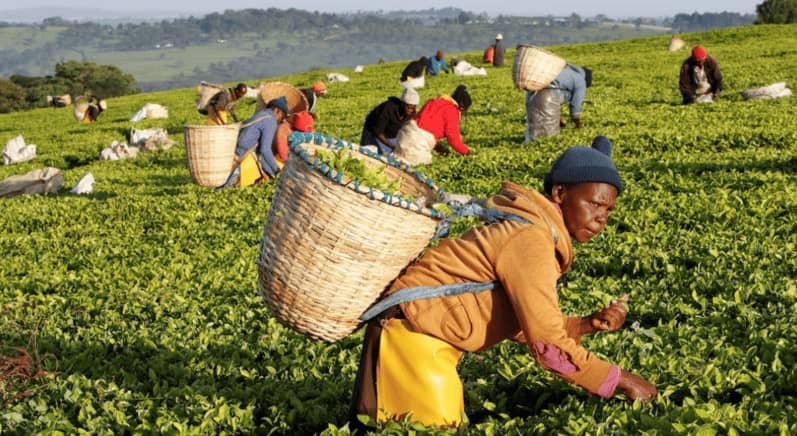 TEA FARMERS WIN BIG! GOVT RELEASES Shs 89BN TO RESCUE TEA SECTOR: AS HON. KARIISA KOY PUSHES TEA BILL FROM SEEDLING TO CUP
FROM SLAVE BOY TO PRIEST: The 3-Year-Old Slave Captured In Mpororo Who Became The Father Of The East African Revival. Rev. Aloni Muyinda.

By Musa Rwamigoye
When a small child, Aloni Muyinda a Muhima from Ankole had been captured and taken to Buganda. He was a descendant of Kahaya Ritindangyezi, since he was from the clan of Bene Rukaari, a sub-clan of the main Bashambo clan.
The Bene Rukaari trace their origin from Prince Rukaari, first son of Kahaya Ritindangyezi, who is regarded as a foundational figure for the Bashambo (Bahororo) clans and sub-clans.
In his own memoir, he says:
“I was taken as a slave in 1879 A.D when I was at the age of 3. That means that I was born in August 1875.”
Other church records put his birth earlier, around 1865. The difference is not surprising. A child taken at age 3, who lost his parents, his home and his clan name, could not keep exact records. What he kept was the memory of the raid, the journey, and the grace that followed him.
What all records agree on is this: he was captured from Mpororo in Ankole and taken to Buganda to be prepared for export as a slave.
The commander of the raid that took him was known as Bunyaga. He is mentioned in the book of Ba Ssekabaka be Buganda on page 151.
Before he was taken, he had known the names and faces of people, but he never knew their clans. He never knew his own clan either.
Many Bahima that he met in Buganda tried hard to free him, but whenever they asked him about his clan, he did not know it. They kept on saying, “The Baganda bewitched him that he may not know.”
That one sentence explains the whole pain of slavery. It was not just taking the body. It was taking the identity. A child without a clan in Ankole was a child without a home, without land, without protection. And yet, God did not leave him there.
LIFE WITH LULE AND SEMBERA.
Muyinda lived with M. Sembera and God showered him with blessings wherever he went. Sembera aimed to make him forget his friend S.M the Mutagobwa, that he should not leave him. He was well aware of their agreement of later returning to his friend. He showed him much love, because he knew exactly how his old Master Lule had treated him when he was still living.
He lived with M. Sembera for a period of one year; from January 1891 to January 24, 1892. Sembera was not his first master, but he was the one who showed him that a master could also be a father.
TAKEN IN BY THE MISSIONARIES.
After the death of M. Sembera, all the boys who lived in his house decided to leave and go to their relatives. But Muyinda and another boy Kataki who was freed from slavery like him, freed by the CMS missionaries from Sukuma stayed at home with the widow of Sembera.
As they were still pondering what they would do next, the elders heard that “In the late Sembera’s house are two boys, and they do not have families. The priests; Rev. Baskerville and Rev. J. Roscoe should take them in.”
They were sent for and asked, “Do you agree to be with us?”
“If you want to stay with us, you can be with us and help us with some work. Now, let each of you choose whom they want to live with. We are two and you are two. Go ahead and decide; we do not want to decide for you.”
Because his friend was older than him, he chose Rev. J. Roscoe. He was the one they loved most, and was a very good friend to M. Sembera. Children loved him much.
On the other hand, people feared Rev. G.K Baskerville, that he was very threatening. And that was the truth; those days when he was still a youth he was very tough. But he was also very generous to his boys than any other.
Therefore, Muyinda reluctantly agreed to go with him, because his friend took the first choice. He did not know it then, but that reluctant choice would change Uganda’s church history.
NEW CLOTHES, NEW LIFE.
When he arrived in his home, Baskerville made him remove all his old clothes and asked him to throw them away. Then he bought for him two American shirts, a piece of cloth for his trousers and a bed sheet. M. Sembera had made him throw away his hides because they had become very old.
In the morning, a boy named Kiyaga Kyakwambala tailored them. During those days it was very rare for a child who is not from a rich family to put on American white clothes.
So, his God again made him see kindness before Rev G.K Baskerville whom he had feared that he was very tough. He became his friend that he did not even see his anger. It was a small act new clothes but to a former slave boy, it was a sign: you are no longer a slave. You are a son.
BASKERVILLE’S BOY & FIRST MUNYANKOLE CHRISTIAN.
He became one of Rev. G.K. Baskerville’s boys and a right-hand man to both Baskerville and George L. Pilkington.
Aloni Muyinda was the first Munyankole to be converted to Christianity by George L. Pilkington and G.K. Baskerville, members of CMS upon reaching Uganda in 1890. Shortly after his conversion, he became a right-hand man to both Pilkington and Baskerville in all of their activities.
He was not just a servant. He was a translator, a teacher, a companion, and a witness.
BAPTISM AND THE CALL TO PREACH.
He was baptized on 8th May 1892. He got confirmation on 13th February 1895. Then he went to Kyagwe to preach the gospel in the year 1895.
He volunteered to go and study Catechism and later he was sent to Ssi village, at the palace of Chief Kiberu. He spent six months there and came back at the time when the Reverend was getting his leave.
He was ordained deacon in 1900, married a Munyoro named Yokubezi, and was sent to Ngogwe. In the same year he visited Ankole, and witnessed the burning of Nuwa Mbaguta’s charms. That burning was a public sign. The old gods were being left behind. A new faith was entering Ankole and the man carrying it was a son of Ankole who had been taken away as a slave.
THE JOURNEY TO MOMBASA 1895.
They set off to go in 1895 and travelled for three months to Mombasa. The route was to pass through Nairobi. At Nairobi there was not even a hut. The only thing there was a sign of the direction of water. And on it was that name ‘Nairobi’.
In the third month, they arrived at Mombasa and saw great things. That was where they met the first group of British women who were on their way to preach the gospel in Buganda. They were five.
They also met missionaries of Nsambya who were on the way to start work in Buganda. That is also where he met with Mr. G.L Pilkington. He was very happy and introduced them saying, “these are from my home.”
They eventually arrived at their destination. What they saw first were two British warships with their missiles. The small boats were called Zube and Balata. They were also shown a telephone. They saw young men climbing masts.
They went to Kishoumi at the CMS mission home. That is where their elders left them. Their reverend told them to stay there until he comes back. He selected three of them, the eldest, to stay in the college and the two who were younger to stay with the head of the mission home.
But for Muyinda, he stayed with the head of the college, Mr. J.T Hamsher. There were eight students and they were three. They were seven from Africa and four Europeans, to make eleven in total. One of them, the Africans, was from Kilimanjaro.
So he lived with Reverend J.R Hamsher like his child. He helped with his small works. During that time he started courtship with a girl, one of the British girls who were preaching the gospel in Mombasa. He was later chosen to be one of the teachers in the high school. When he was leaving, they took a photograph of them and gave him a copy to remember them.
In 1895, Aloni accompanied Baskerville to the coast and was made to stay in Hampshire’s Theological Class to be ordained.
THE LUGANDA BIBLE.
They were in peace, waiting for their elders to come back. But they received their letters every week. Their journey to Britain was not actually for resting, but they were embarking on the work of translating the Holy Book to Luganda. It was still in Swahili language. They were on the work of monitoring its printing.
When Mr. Pilkington and Kitakule had finished translating it to Luganda, Mr. Pilkington took it to Britain to be printed in Luganda. While Pilkington was monitoring its printing, Rev. Baskerville was adding in words of references, just as they appear today in both the Old and the New Testament.
In those days carriers took a long time, six or eight months to deliver in Buganda from Britain.
His four friends and he first received the New Testament in Luganda, with its references. They were given to them by the mother of Reverend Baskerville. Reverend Baskerville himself brought them saying, “Look, my mother has sent you gifts.” His book was the most beautiful and most durable, because he still had it.
Their Reverends came back with more staff to help work in Buganda. These were; Rev. H. Crayton, Rev. S.J Caller Weatherhead, Wigdam, Tegate who was a deacon and preacher of Tahuti and Doctor A.R Cook, the medical doctor. Mrs. Bird was already in Mombasa, waiting to come with them.
Among them, he got eight of them to teach them Luganda. They were Doctor A.R. Cook, Rev. H. Clayton and S.J Collas. The three of them were so happy to learn Luganda.
They set off in November 1896, in a very big group. There were nine White men and three White women. There was an assistant doctor too, Dr. Baksta. They were thirteen in total.
They started the journey going to Kirindani because they were to travel with the train. But it passed when they were still on water. Actually the rail line had started to be built when they were in Mombasa. They caught up with it and it took them for a distance that one can walk on foot for a day. That was where the line had stopped and they continued on foot. They arrived in two months and stayed at his home, Ngogwe in happiness.
Think about it: the boy who did not know his clan was now teaching white missionaries his language, and helping to bring the Bible in Luganda to his people .
THE NIGHT ON KOME ISLAND & BIRTH OF THE REVIVAL.
His special moment was the manifestation of the Holy Spirit to George Pilkington at Kome Island. In fact, the revivalists, the born-again brethren, consider that day as the origin and birth of the East African Revival.
Before the Revival Movement, Muyinda had escorted George Pilkington to Kome Island on Lake Victoria for meditation and when time for sleeping approached, both shared the same hut.
From that day, both became inseparable until December 11, 1897, when death robbed Pilkington in a tragic manner at Port Luba Hill.
The death of Pilkington came after Pilkington, Lt. Norman Macdonald and Captain Harrison with their associates decided to cut the banana plantation and groves near to the right-hand side of Port Luba.
Records indicate that the banana plantation and groves that were cut were always used as a source by Nubians who were already positioned in that plantation.
Muhinda tried to warn his masters Pilkington and Harrison about the closeness of the enemy but his warning was unheeded, so the two believed they were not enemies.
As Harrison was questioning Muhinda why he fired a bullet without his orders, the enemy emerged from the nearby groves and shot Pilkington, shattering his thigh. Muhinda and his fellows lifted Pilkington to a distance away from the plantation.
Pilkington turned to them and said:
“Thank you comrades for taking me from the battle field”
And at that time he became insensible because of too much pain and bleeding. Later he was lifted to the camp and shortly passed on, but prior to his passing on, Lt. Norman Macdonald had been brought to the camp already dead. The death of two masters on the same day marked the end of Muhinda and Pilkington.
Muyinda lost his master, his friend, and his teacher in one day. But he did not lose the fire he had seen on Kome Island. That fire would follow him for the rest of his life.
THE SEARCH FOR HIS PEOPLE.
He suggested to move to Ankole and Mpororo to seek for his people whom he had heard of. He asked for permission from the church people of Tooro. They instead told him to seek the permission from Archdeacon Walker. He wrote to him and he granted him the permission.
He went in July and also took a letter to the D.C Watcher. He asked the Saza Chief Ruhara, the Mukwenda, to give him men to escort him.
The Enganzi then said, “I will give you my own men to take you through my county Shema and when you reach Kitagata, they will show you the right way to Mr. Timosewo Rwankaranga who will again give you people to show you the roads.”
That is what he did; he gave him men to go with. When they reached Mbarara, they slept at Kabwohe at Kyeyonka’s home. He treated them very well. The next day they reached at Marembo in the home of Rwenkaranga and they felt as if they already reached one of the people that they intended to meet, because of showing them much love.
In 1903 he went to Toro and was in charge of the church at Butiti until 1907, when he was transferred to Kamukuzi, Mbarara.
On his return to Ankole it is said he still remembered Runyankole, and although his parents had died he was able to find members of his clan and claim his father’s possessions. The slave boy had come home. Not as a slave, but as a preacher.
RETURN TO BUGANDA, THEN THE FIGHT FOR LAND.
At home he found when the Bahima had built for him a house. His children were there but his things had stayed in Butiti in the house of Teacher Festo Kaboha who was keeping them well. He spent there one week and left for Buganda where he arrived on February 20, 1908.
He passed through the road of Kijungute and through Kinakulya went to see Edward Bakayana, who was his Godfather. After seeing him, he reached the city and went to see the Bishop A.R Tucker.
When the Bishop heard that he too had reasons, he wrote a letter for him to take to Rev. Baskerville. Baskerville in return wrote everything to the Bishop, asking him to allow him have land in Mpororo.
The Bishop wrote to the Governor and gave the letter to J. Roscoe. Roscoe then went to the Katikkiro A. Kagwa, to ask him to investigate the truth of his story, if truly he was taken as a slave from Mpororo. The Baganda did not know that they reached Mpororo, they thought that they fought at Isingiro. Even in the book of Bassekabaka they refer to it as Isingiro.
When they proved right that they indeed fought at Mpororo, Roscoe was given the letter to take to Entebbe.
On 24th May, he received a letter from Baskerville in Mukono, saying, “Come back, your matters are now well. The governor said that we need to send you to Ankole, the rest will be solved when you are there.”
The Church people also said, “There is a job for you at Mbarara Church. It is vacant because Mikayiri Mangasi who was doing it was called to study for deaconship. When you reach, it will be good to help Reverend Owen.”
Then Roscoe went to tour Bulemeezi, but he had written to Reverend Owen about all that was happening. When Owen gave this news to the Banyankole, they mobilized and said, “We do not want Aloni Muyinda to teach us here. We are his enemies because we killed his people, and he wants their land back. How will he teach us knowing that we killed his people? We want our teacher Mikayiri Mangasi to keep teaching us.”
It was a painful rejection. The very people he had come to serve feared him because of what had been done to his people.
THE KING WHO LOVED HIM.
After the prayers, he went to see King Kahaya. When they told him about his presence, he came quickly to see him at his reception.
He greeted and asked him, “Are you the trainer of all the people I hear singing?” He asked, “Where do they come from?”
He answered that they come from this town, others from the Enganzi’s enclosure.
He then asked, “Do you come here?” He said he does but does not get the chance to see him. The guards do not let him. He said, “If I knew, there is no way I would miss seeing you.”
He added, “There are many boys living in this palace. I will send all of them to you to learn. If anyone misses without a sounding reason, inform me and I will punish them accordingly.”
He had always been afraid and could only go there a few times because he thought that the king did not like him. The fake messages were from his guards and commoners, but actually King Kahaya did not hate him at all. He showed him love when he gave him two cows at once, he gave him English shoes and a nice kanzu tunic which had been donated to him by a guest from Buganda.
He was receiving all the help and support from the King and the Enganzi, because those were his back to lean on in Ankole.
The Enganzi gave a full day of Wednesday to receive a cow, or two or three; whatever number of cows that are brought as gifts to the Enganzi for the full day of Wednesday.
But again he was unlucky. If he wasn’t unlucky, this way would make him a 100 cows rich, just from N. Mbaguta the Enganzi alone. But whichever cow he gave him died. The reason was that they were being brought from places where there was no cattle diseases. But there was a strong cattle disease in the Mbarara area, that foreign cattle would not survive it.
For the King Kahaya, he gave him a share of 10 rupees whenever his collection was brought to his palace. He connected him to his treasurer Aloni Mutetika who cut off that amount for him. He received that for a time, until he gave him a grand prize of a girl, together with many precious gifts, including housewares. He gave him 60 cows on top of that, and then stopped the weekly offer. He asked him to transfer the 10 rupees to another poor person.
Before Reverend Wright’s time had gone far, they brought Reverend Lemine and he was so happy for him, because he seemed from the beginning that he would be his friend. He was indeed his friend, more than what he had thought of him. They spent four years together but he had not changed.
THE TRIAL OF 1917 AND A NEW CHURCH FOR THE BAIRU.
They lived in peace, until the year 1917 when he faced another trying moment. It developed from the cattle of their brother Ruhunga who was murdered in the middle of the night in his house. He had 1600 cattle, together with his people. But the leaders and the committee resolved to take his cows without giving any to his family.
He had been a close friend of his, and he had once asked him to help count his cows. He was a blind man from childhood, because he had suffered from smallpox when he was a child.
So, even this time he sent his boy to go and mark all the cows and record them in a book. But as he was counting, the boy was killed. When he learnt of this, he went to the bereaved home and started collecting all the property of Ruhunga. He did not have an old child, all were young and so the leaders wanted to take all his property.
In the old ways, if a person dies and he did not have an old child, all his property was taken to the king. He told them, “These belong to his children. When the clan gathers, they will see how to give out the things among the children.”
They sued him for a fine of 1200 cows and 600 rupees as fees. The case also reached the D.C of the Western region. They lost and the property was confiscated and given to the committee as the majority wished. They chose the king as the trustee.
The accusation came back to him, that he called them thieves and cheats before the D.C. “How will the D.C trust us again when he called us thieves?”, they complained. They added, “We do not want him to preach to us the Word of God anymore.”
Their words reached the D.C and eventually to the Church leadership and the Bishop.
With that, he said, “I too do not desire to continue working among people like you. I will rather work among people who have not heard the word of God, the commoners who do not have positions.”
It spread that the leaders will not go for Holy Communion again if he remained among the people who give it.
He said, “If I am bad, I will not go on to destroy the work of the others. I will leave the town and go to the village to build for the Lord a new house. I will worship him together with my people who are the Abairu. So I came here and built a house of prayer for the Lord.”
During that time, his wife Eva S.S.K, the girl who was given to him by the Omugabe on 12.08.15, gave birth to their first child on September 13, 1917.
When the church was completed, he invited the head of church in the whole of Ankole, Rev. H.B Lewin R.D, to come and officiate at the Church. He also baptized his child Manase “Origin Murari Balimuttajjo”. He was the first person to be baptized in that Church and blessed it. He dedicated the Church to St. Augustine. Four of his children were baptized there. Three are alive but one died. The rest have totaled to 400. To date, it is the oldest Church in the counties of Rwampara and Kajara.
Peace prevailed and he felt so happy for bringing light to the Bairu who lived in those two counties. After a time, they cried for him because they desired to receive the sacrament of Holy Communion. They desired to eat the food of our Lord. But there was no one to give it to them. He agreed to be a priest. He was consecrated on February 27, 1921. He was sent to serve that very area.
In 1918 he was put in charge of Muruti and in 1921, after being ordained priest, he was put in charge of Itojo in Rwampara.
Rev. H.M Grace baptized his second child. He also took a photo of all of them inside the Church, and he was standing on the pulpit. But he was not wearing the cassock. He was with his wife, children and one brethren. The twins were not yet born. When the twins were born, they were also baptized in that Church.
The two priests who baptized his children are the ones who bore them in baptism too. The first one was baptized by Reverend H.B Levin and was his Godfather. The second one, Reverend H.M Grace baptized him and was also his Godfather.
He lived in peace until the year 1923, when the government people confiscated all the villages of the bataka in Ankole. He was a victim too. They remained commoners until the year 1925 when they promised to return that land. But many had died during those two years.
FROM ITOJO TO NTUNGAMO: REVIVALISM AND LEAVING ANGLICANISM.
After he was ordained priest in 1921, Rev. Aloni Muhinda was put in charge of Itojo in Rwampara, Ankole.
It is believed that at Itojo, Muhinda started practicing Revivalism an act that contradicts the Anglican Faith and hence leaving Anglicanism.
Perhaps the same Holy Spirit had manifested to him like it had done to his master Pilkington at Kome Island. That is the same Holy Spirit that the revivalists, the born-again brethren, say was manifested to Pilkington at Kome Island the day they consider as the origin and birth of the East African Revival.
Muhinda had been there. He had escorted Pilkington to Kome Island. He had shared the same hut with him that night. Now, years later at Itojo, that same Spirit was manifesting in him.
In 1927, he became a Seventh Day Adventist. He left the Anglican Church he had served for more than 30 years.
HIS TWO WIVES AND HIS FAMILY.
Muhinda had married a Munyoro woman called Yokubezi but she suddenly died at Mengo Hospital after delivering. In fact, it is said that she was the first woman to give birth by caesarean and the operation was carried out by Dr. Cook.
Dr. A.R. Cook was the medical doctor who had come with the missionaries from Mombasa in 1896 the same doctor Muhinda had taught Luganda to.
Yokubezi died, but she left behind a child. That child would later carry the name Cook in honour of the doctor who tried to save his mother.
Back in Ankole from Buganda, Muhinda married Eva Kekorokonya. Eva Kekorokonya was of the royal clan. She was the girl who was given to him by the Omugabe on 12.08.15, according to his own memoir. She gave birth to their first child on September 13, 1917.
From that marriage, a great family was born a family that would go on to serve Ankole and Uganda in business, in government, and in the Kingdom.
HIS DESCENDANTS.
Chrisostom Edward Cook former Chief of Rwampara in early days of 1930’s.
Phenehus Muhinda the father Kyomugisha Merian a business lady
Mananse Balimutajjo the father of Richard Muhinda, former Uganda State House Comptrollea
Phoebe Kyabarongo, mother to Jolly Kanyamunyo.
Edward George Tinka
Kato Muhinda
Stella Karuhanga, a wife to Hon. Elly Karuhanga a.k.a Rutarendeza Rwanyabushozi
Lastly my friend Kabagambe Nicolas grandson of Mugarura, first son of Cook.
N.B, In fact, Edward Cook escorted the Ankole King “Omugabe” to attend the coronation of King George VI of the United Kingdom on 12/5/1937.
From a slave boy captured at age 3 in Mpororo, who did not know his clan, to a man whose grandchildren would escort a King to London and serve in State House that is the story of Aloni Muhinda.
A MAN WHO CARRIED TWO FIRES.
He carried two fires in his life:
1. The fire of education and church building from Ngogwe to Butiti, to Kamukuzi, to Muruti (Omuuti), to Itojo.
2. The fire of revival from Kome Island with Pilkington, to Itojo where he left Anglicanism to follow the Holy Spirit.
That is why, to this day, both Anglicans and Revivalists claim him. The Anglicans remember him as their first Munyankole priest. The Revivalists remember him as the man who was there at the birth of the Revival.
Leave a Comment
Your email address will not be published. Required fields are marked *