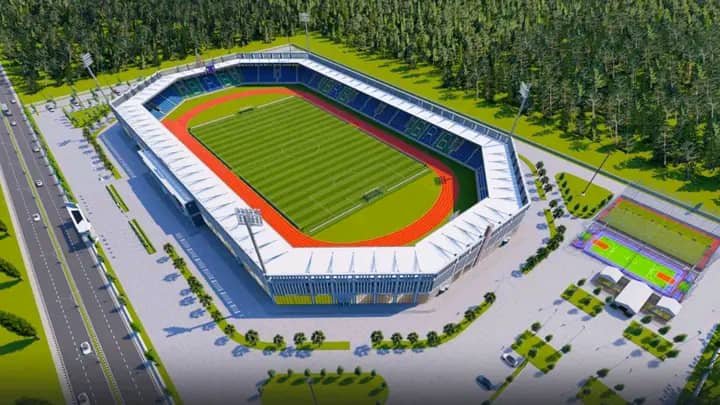
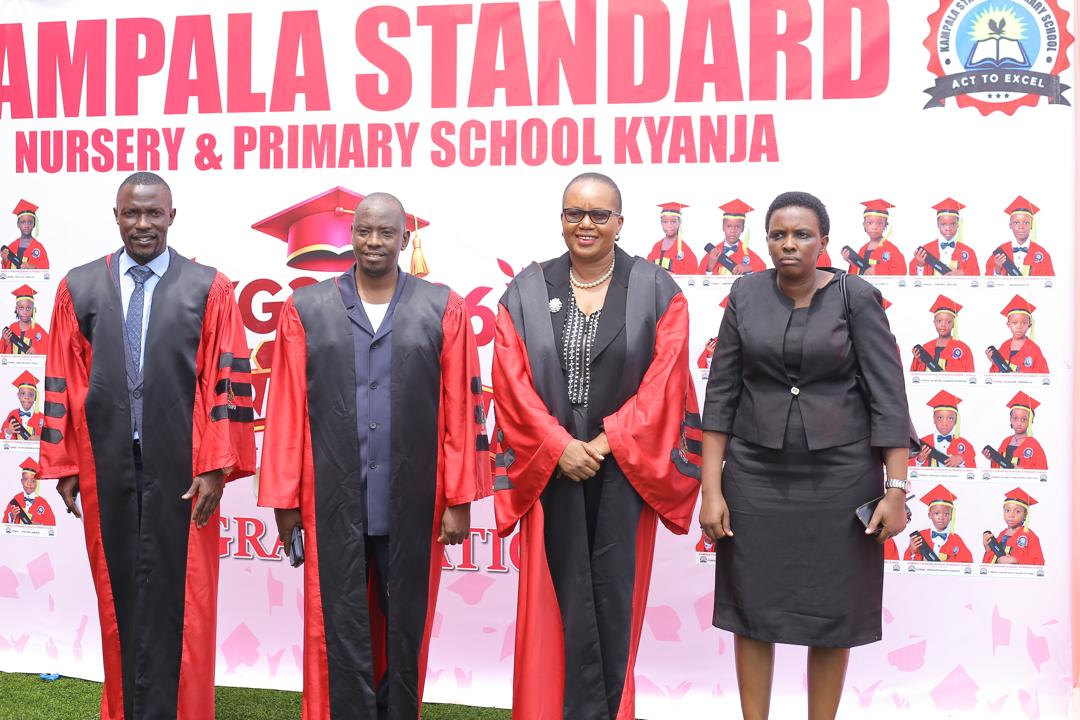
 HON MINISTER LYDIA WANYOTO, HON. JAMES KABERUKA ENCOURAGE KAMPALA PARENTS TO TAKE LEARNERS TO KAMPALA STANDARD NURSERY AND PRIMARY SCHOOL KYANJA FOR HOLISTIC LEARNING EXPERIENCE.
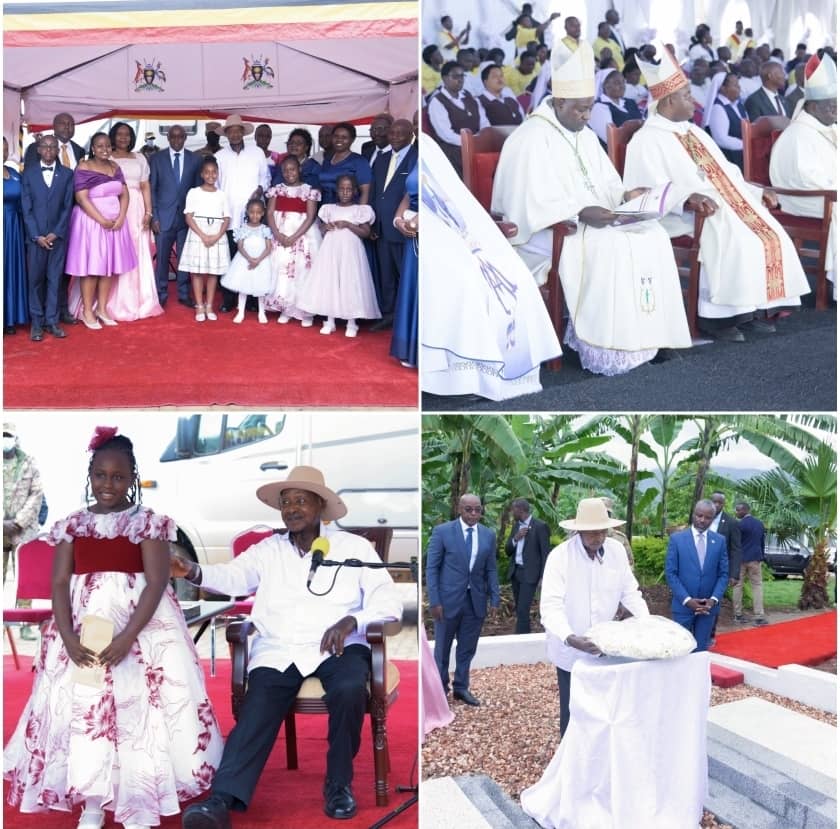 BOY FROM THE HILLS OF NYARUSHANJE NOW CHIEF JUSTICE: Zeija Thanks God, Museveni. H.E MUSEVENI TO KIGEZI: Education Must Go Hand In Hand With Wealth Creation.
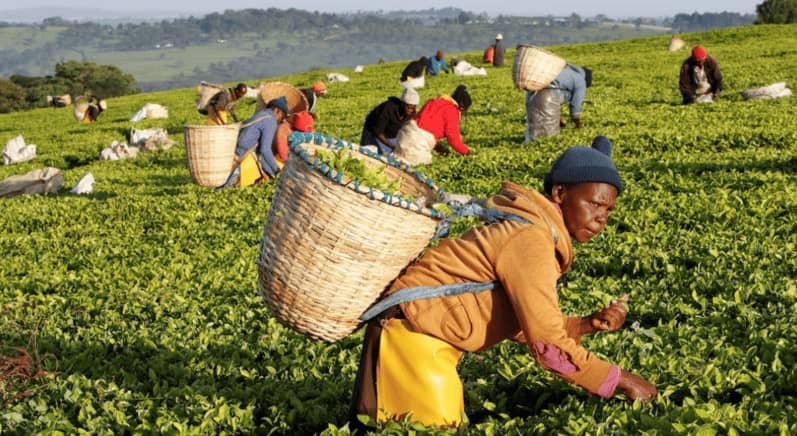 TEA FARMERS WIN BIG! GOVT RELEASES Shs 89BN TO RESCUE TEA SECTOR: AS HON. KARIISA KOY PUSHES TEA BILL FROM SEEDLING TO CUP
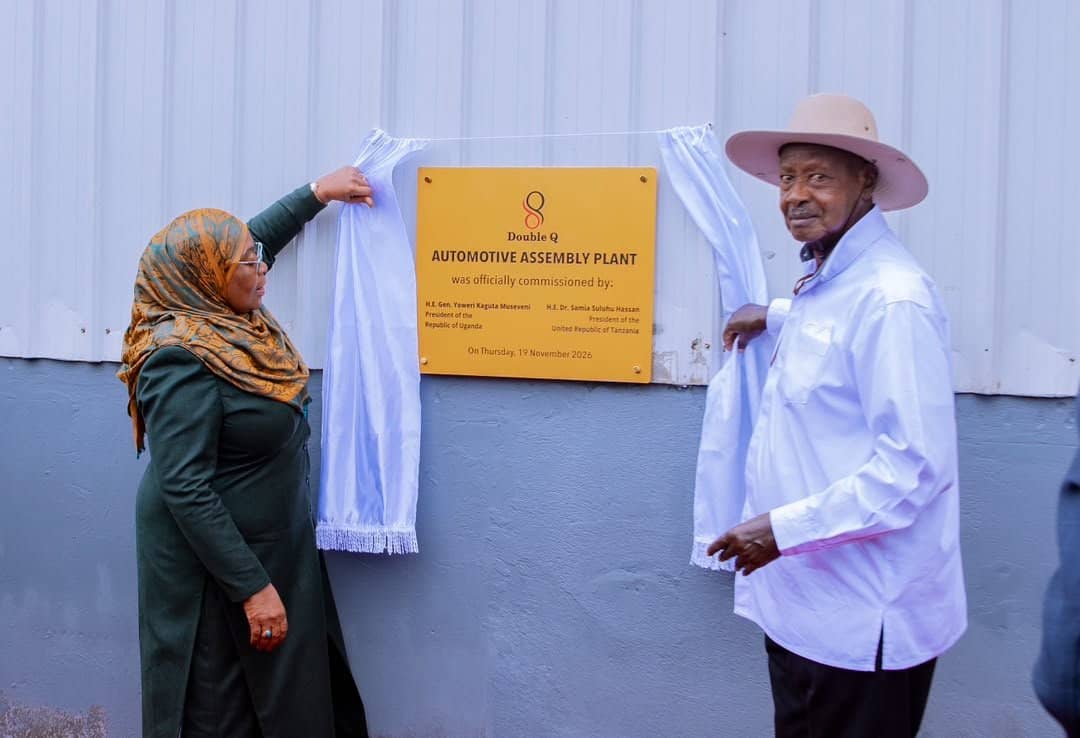 EAST AFRICA MUST COMPETE WITH THE WORLD, NOT ITSELF. H.E MUSEVENI & H.E SAMIA LAUNCH $30M TRUCK PLANT – UGANDA TO BUILD 4,000 TRUCKS A YEAR
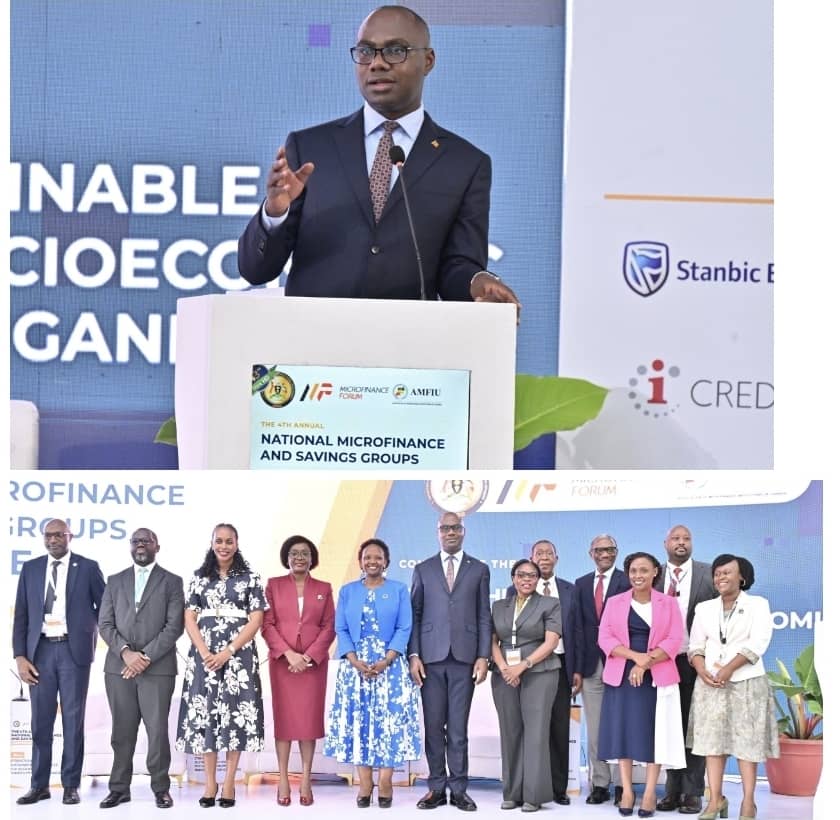 GOVT HAS PUT TRILLIONS IN YOUR HANDS, BUT MANY UGANDANS DON’T KNOW: MUSASIZI AND MUSHERURE TELL SACCOs TO SHOUT LOUDER.
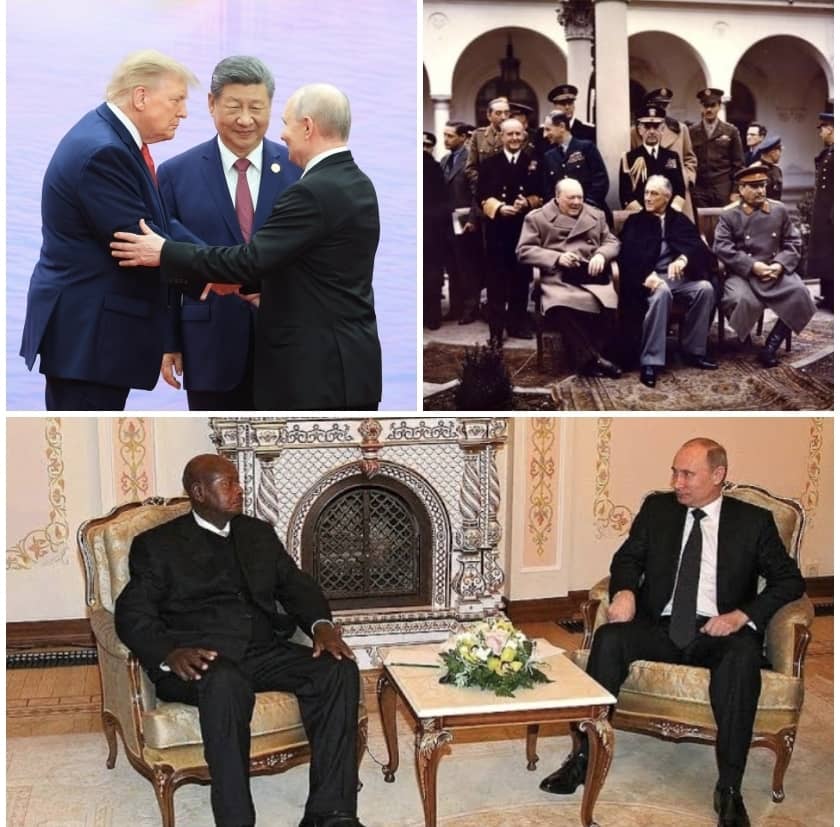
FROM YALTA 1945 TO SHENZHEN 2026: TRUMP, XI AND PUTIN MEET AND THE MISSING CHAIR FOR AFRICA. What if Museveni was there?.
By Musa Rwamigoye.
SHENZHEN, CHINA: Once in a lifetime, the leaders of China, the USA, and Russia are holding a trilateral meeting in Shenzhen, China.
The last comparable meeting was in Yalta in 1945 with Roosevelt, Stalin, and Churchill. That meeting reshaped the world.
Today, history is repeating itself but with new faces, new powers, and new dangers.
However, one big question is being asked across Africa, especially in Uganda.
What if President Yoweri Museveni was in that room representing Africa?
HISTORY MADE IN SHENZHEN.
History was made today in Shenzhen, China, as the leaders of the world’s three biggest nuclear powers sat down together for the first time ever.
US President *Donald Trump, Chinese President Xi Jinping and Russian President Vladimir Putin held an unprecedented trilateral meeting on the sidelines of the Asia-Pacific Economic Cooperation (APEC) summit.
The meeting, chaired by President Xi at the Kylin Villa, lasted more than one hour and ended with what the three leaders called a “peace declaration.”*
Opening the meeting, Xi said it “has groundbreaking significance.”
Trump said the three countries are “uniquely positioned” to discuss nuclear weapons, describing them as three of the world’s largest nations holding the planet’s three biggest nuclear arsenals.
Putin said he expected “big potential benefits” from the talks.
WHAT WAS DISCUSSED?
According to Chinese state media and international reports, the leaders exchanged views on:
- The Ukraine crisis.
- Prevention of nuclear proliferation.
- The situation in the Middle East, including Iran.
- The Korean Peninsula.
- Trade, AI and global security.
In their joint “peace declaration, “the three leaders pledged to talk further about “reducing nuclear risks and preventing nuclear proliferation” and reaffirmed that a nuclear war cannot be won.
Xi also said nuclear weapons should be comprehensively banned and thoroughly destroyed, building a nuclear-free world.
Notably, Ukraine was not explicitly mentioned in the joint statement, and a Kremlin spokesperson said Ukraine was not even the “central topic” at the trilateral meeting.
TRUMP CALLS BOTH MEN “MY FRIEND.
Before the three-way talks, Trump held separate bilateral meetings with both Xi and Putin.
Trump described Xi as a “friend” and said Washington and Beijing enjoyed a “special relationship.” He also called Putin “my friend” during their bilateral meeting.
Xi personally greeted Trump at the airport in Shenzhen on Wednesday in a rare gesture and later hugged him. On Wednesday evening, the three leaders were pictured together at the APEC welcome banquet, with Trump and Putin shaking hands as Xi looked on the moment captured in the photo above.
1. YALTA 1945: THE MEETING THAT DIVIDED THE WORLD
On 4th/ 11th/ February 194 in Yalta, Crimea Franklin D. Roosevelt (USA), Winston Churchill (Britain), Joseph Stalin (Soviet Union – now Russia met.
World War II was almost over. Germany was collapsing. The three victors met to decide: What will the world look like after Hitler?
What they decided:
- Germany to be divided into 4 zones; American, British, French, and Soviet. This later became West Germany and East Germany.
- Poland’s borders to be moved and Poland to get a new government friendly to Moscow.
- United Nations to be created to prevent another world war. The UN was born just months later.
- Soviet Union to join war against Japan in exchange for territory in Asia.
- Eastern Europe to have “free elections” a promise Stalin never kept.
The result? The world was split into Two Camps; the capitalist West led by America, and the communist East led by the Soviet Union.
That was the birth of the Cold War a 45-year standoff that lasted until 1991, with proxy wars in Korea, Vietnam, Afghanistan, Angola, and even here in Africa.
Yalta did not just end a war. It drew the map of the world for half a century.
2. SHENZHEN 2026, THE NEW YALTA?
Donald Trump (USA), Xi Jinping (China), Vladimir Putin (Russia)
81 years later, the cast has changed.
- Britain is out. China is in. Britain is no longer a superpower. China is now the world’s 2nd largest economy, the factory of the world, and a rising military power.
- Soviet Union is gone but Russia is back and smaller than the USSR. But under Putin, it has nuclear weapons, oil, gas, and ambition.
- America is still there. But America is no longer unchallenged. It now shares power.
And just like Yalta, the world is at a turning point.
At Yalta, the question was: How to end World War II?
At Shenzhen, the question is: How to prevent World War III?
3. WHAT IS AT STAKE IN SHENZHEN?
At Yalta, they talked about Germany and Poland and at Shenzhen, they talked about:
a) Nuclear Weapons, The Biggest Danger.
The three countries hold *over 90% of the world’s nuclear weapons*. Trump wants arms control. Xi says ban them completely. Putin wants Russia treated as an equal. One mistake here could end humanity.
b) Ukraine, The War In Europe.
Just like Poland in 1945, Ukraine in 2026 is the country everyone talks about but Ukraine was NOT in the room. At Yalta, Poland’s fate was decided without Poland. At Shenzhen, Ukraine’s fate was discussed without Ukraine. History repeats.
c) Taiwan, Iran, Korea, and AI.
New dangers that did not exist in 1945: Artificial Intelligence weapons, cyber war, chips, Taiwan, and Iran’s nuclear programme.
d) Who Leads The World?
At Yalta, America and Soviet Union emerged as superpowers. At Shenzhen, the question is: Will the world be led by America alone? By America + China? Or by a new balance of three?
4. THE BIG DIFFERENCE: YALTA WAS ABOUT VICTORY. SHENZHEN IS ABOUT SURVIVAL.
Yalta leaders were allies who had just won a war together. They trusted each other at least a little.
Shenzhen leaders are rivals. America and China are in a trade war. America and Russia are on opposite sides in Ukraine. China and Russia are now closer than ever.
They are not friends meeting to celebrate victory. They are competitors meeting to avoid disaster.
That is why analysts call Shenzhen “Yalta 2.0” but more dangerous.
Analysts say no major breakthrough was expected and none came. But the meeting itself was the message.
For Putin, it was a return to the biggest global stage since Russia’s 2022 invasion of Ukraine. For Trump, it was a chance to show he is still in the game on world diplomacy. For Xi, it was a chance to present China as a peacemaker and host of the new world order.
Others have compared the meeting to the 1945 Yalta Conference raising fears in Kyiv and other capitals about deals being made over smaller nations’ heads.
5. WHAT WOULD HAVE HAPPENED IF MUSEVENI WAS IN THE ROOM?
In Shenzhen, there were three chairs: America, China, Russia.
There was a fourth chair missing Africa.
And if anyone was to sit in that chair and speak for Africa, for the Pan-African dream, for sovereignty, for peace through wealth creation many Ugandans would say: It would have been President Yoweri Museveni the most influential, informed, African peacemaker, nationalist and Pan-Africanist.
Here is what would have changed.
a) Africa Would Have Had A Voice For The First Time.
At Yalta, Africa was not mentioned. Africa was colonised. At Shenzhen, Africa was still not in the room.
If Museveni was there, Africa would not have been a topic, Africa would have been a participant.
Museveni has for 40 years argued one thing consistently: *Africa must not be a bystander in world affairs.* He would have reminded the Big Three:
“You cannot decide the future of the world without the continent that holds the future — the youngest population, the minerals, the land, and the markets.”
b) He Would Have Spoken As America’s “Blue-Eyed Man” But Also As Africa’s Man
Museveni is unique. He is one of the few African leaders who can talk frankly to Washington, Beijing, AND Moscow and be listened to by all three.
- To Trump, he would have spoken as a security partner a leader America has worked with for decades on regional stability, terrorism, and peacekeeping.
- To Xi, he would have spoken as a development partner Uganda is a key partner in infrastructure, trade, and the Belt and Road.
- To Putin, he would have spoken as a fellow nationalist who believes in sovereignty and non-interference.
Very few leaders in the world can sit with all three and not be dismissed. Museveni is one of them.
c) He Would Have Brought The Peacemaker’s Message.
Museveni is not just a president. He is a veteran of liberation wars, of mediating in South Sudan, Somalia, DRC, Burundi and Rwanda.
At Shenzhen, while the Big Three talked about Ukraine, Taiwan and Iran, Museveni would have asked the question no one else asked:
“What about the wars in Africa? What about Congo? What about Sudan? What about the terrorism in the Sahel? If you want world peace, you cannot have peace in Europe and war in Africa.”
He would have pushed for peace through development* not peace through lectures.
His argument is always the same: People don’t fight because they are evil. They fight because they are poor, unemployed, and feel cheated. Give them factories, markets, and jobs and you get peace.
d) He Would Have Challenged The New Yalta Mentality.
At Yalta, big powers divided small countries.
Museveni would have warned against a Yalta 2.0 where America, China and Russia divide Africa into spheres of influence again.
He would have told them, in his blunt style:
“Africa is not for sale. We are not going to be a Cold War battlefield again. We will trade with America. We will trade with China. We will trade with Russia. But we will not be owned by anyone.”
That is the Pan-Africanist message: African sovereignty first.
e) He Would Have Put Uganda’s Economy On The Table
While Ggoobi was in Munyonyo announcing Uganda’s $70bn economy, Museveni in Shenzhen would have used that number as proof:
Uganda is no longer begging. Uganda is building $70bn economy, Shs1.5 trillion UDC portfolio, 12,000 factories, coffee exports booming.
He would have told the Big Three: Invest in Africa, don’t just extract from Africa.
Build factories in Africa, not just take raw materials. Process coffee in Uganda, not in Europe. Process minerals in Africa, not in China.
6. WHAT DOES THIS MEAN FOR AFRICA AND UGANDA?
At Yalta, Africa was not even mentioned. Africa was still colonised. Our future was decided by others.
At Shenzhen, Africa is still not in the room but Africa matters more than ever.
Why?
- Africa has the minerals for AI, phones, and electric cars — cobalt, lithium, copper.
- Africa has the youngest population in the world.
- Africa is where China, America, and Russia are all competing for influence through roads, loans, military bases, and trade.
While the big three talked about nuclear weapons and peace, African nations will be watching what comes next.
Will it mean cheaper energy? More stable trade? Less war and more investment?
Or will it be just another photo-op?
If the Big Three agree on peace, Africa benefits more trade, cheaper energy, less war.
If they disagree and split the world again into camps, Africa could be forced to choose sides just like during the Cold War.
With Museveni in the room, the “Peace Declaration” would not have been just about nuclear weapons, it would have included Africa’s security and development. The world would have heard that peace without prosperity is not peace.
Uganda must learn from Yalta because its not good to let others decide your future for you.
CONCLUSION: HISTORY DOES NOT REPEAT, BUT IT RHYMES.
In 1945, three men sat in a palace in Yalta and redrew the map.
In 2026, three men sat in a villa in Shenzhen and tried to stop the map from being redrawn by war.
Whether Shenzhen becomes a new Yalta, a moment of peace or a moment of division, will only be known in the years to come.
One thing is sure: Our grandchildren will read about Shenzhen in history books, just as we read about Yalta.
Whether you love him or criticise him, one thing is clear: When Museveni speaks, the Big Powers listen and in Shenzhen, Africa needed someone who could make them listen.
Leave a Comment
Your email address will not be published. Required fields are marked *