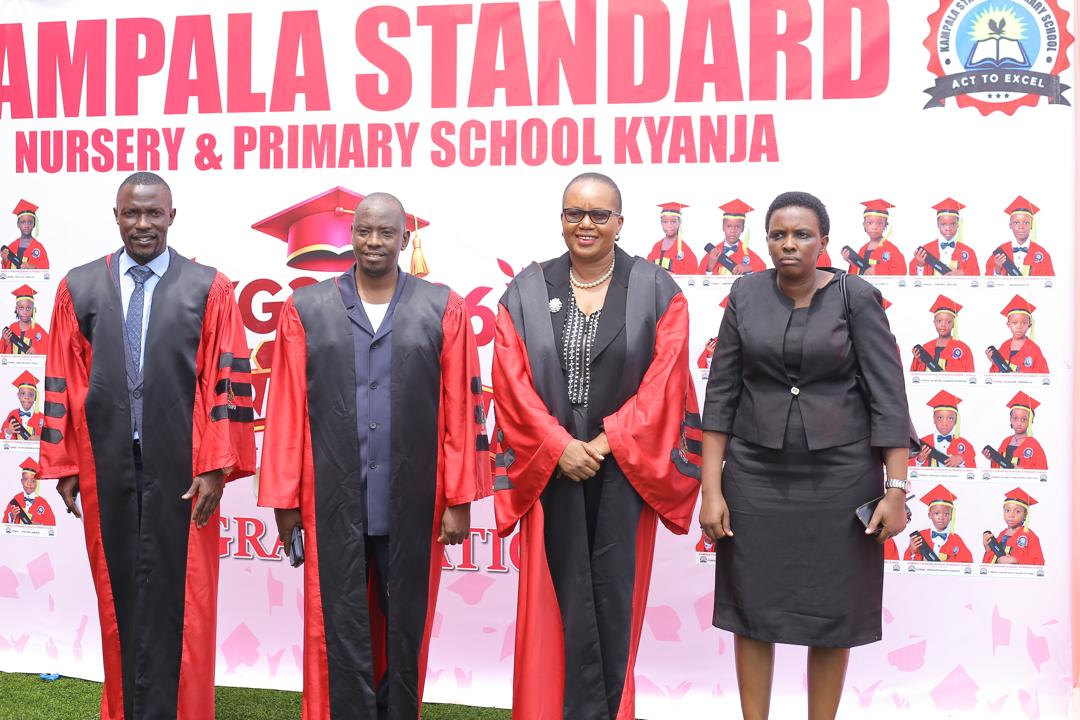
 HON MINISTER LYDIA WANYOTO, HON. JAMES KABERUKA ENCOURAGE KAMPALA PARENTS TO TAKE LEARNERS TO KAMPALA STANDARD NURSERY AND PRIMARY SCHOOL KYANJA FOR HOLISTIC LEARNING EXPERIENCE.
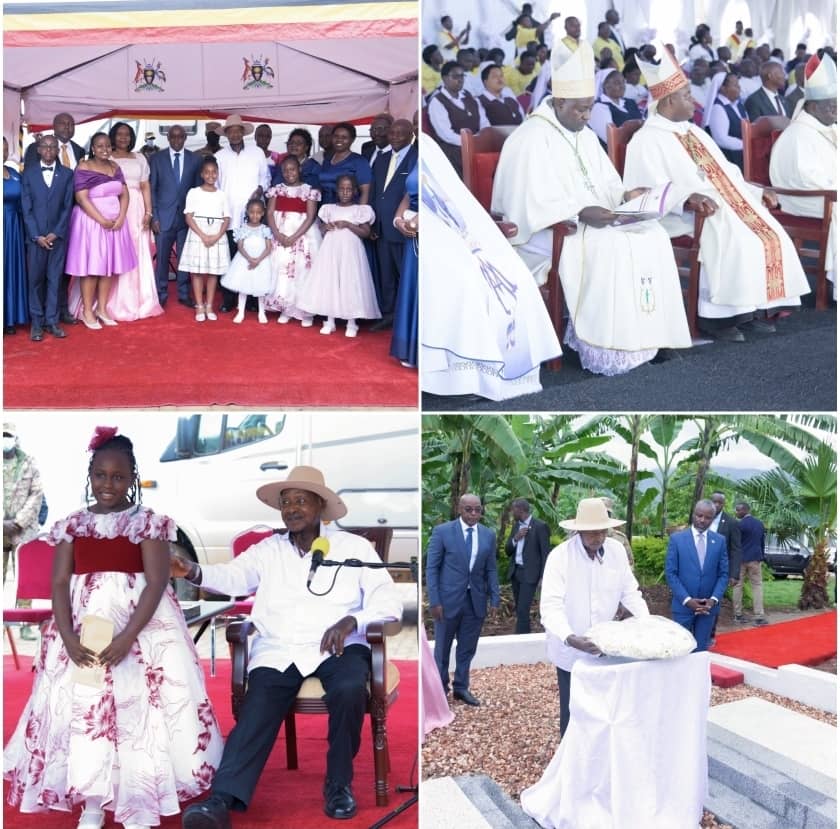 BOY FROM THE HILLS OF NYARUSHANJE NOW CHIEF JUSTICE: Zeija Thanks God, Museveni. H.E MUSEVENI TO KIGEZI: Education Must Go Hand In Hand With Wealth Creation.
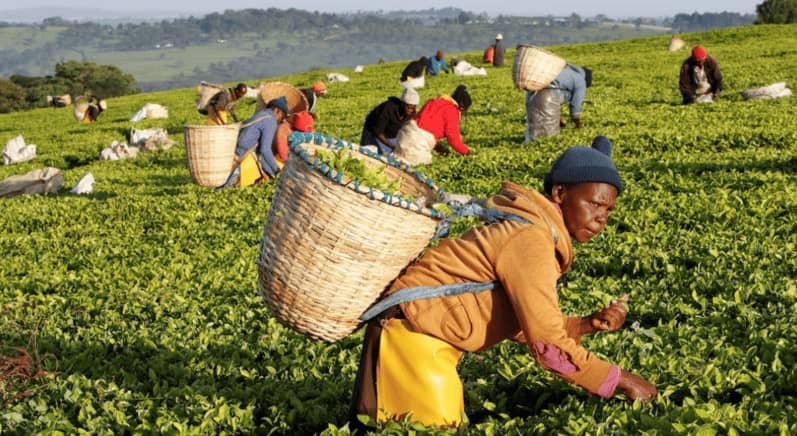 TEA FARMERS WIN BIG! GOVT RELEASES Shs 89BN TO RESCUE TEA SECTOR: AS HON. KARIISA KOY PUSHES TEA BILL FROM SEEDLING TO CUP
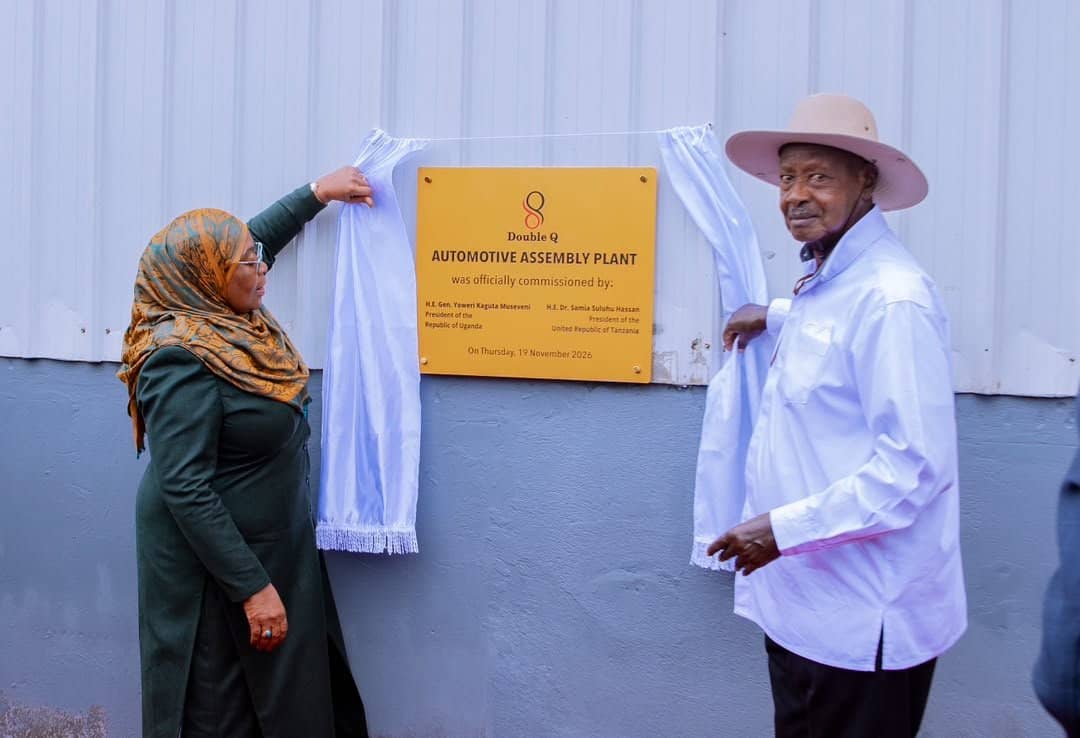 EAST AFRICA MUST COMPETE WITH THE WORLD, NOT ITSELF. H.E MUSEVENI & H.E SAMIA LAUNCH $30M TRUCK PLANT – UGANDA TO BUILD 4,000 TRUCKS A YEAR
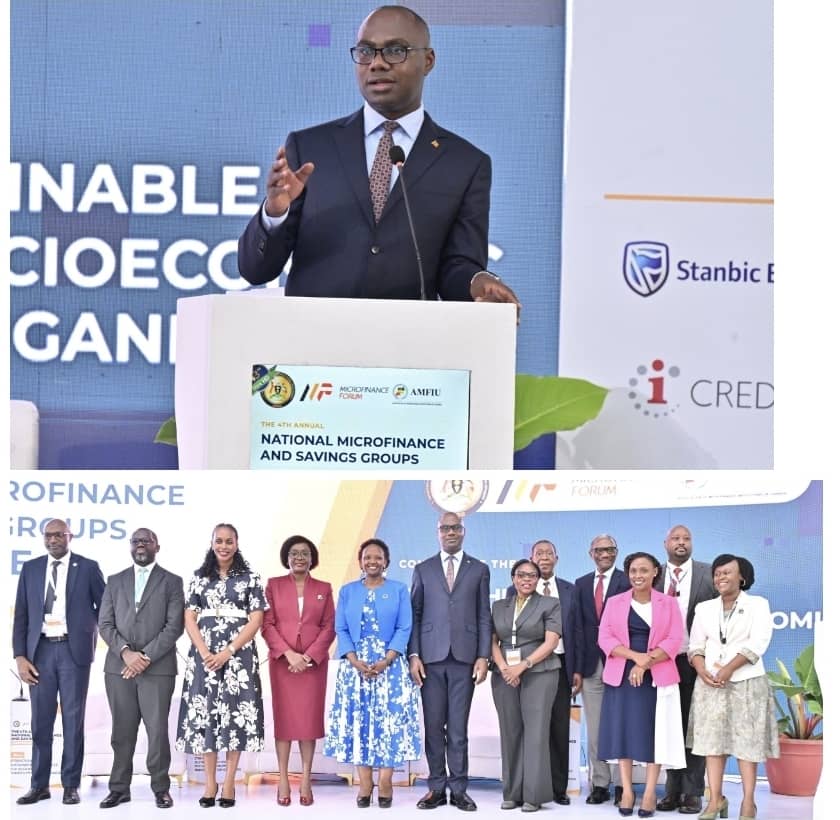 GOVT HAS PUT TRILLIONS IN YOUR HANDS, BUT MANY UGANDANS DON’T KNOW: MUSASIZI AND MUSHERURE TELL SACCOs TO SHOUT LOUDER.
EAST AFRICA MUST COMPETE WITH THE WORLD, NOT ITSELF. H.E MUSEVENI & H.E SAMIA LAUNCH $30M TRUCK PLANT – UGANDA TO BUILD 4,000 TRUCKS A YEAR

By Musa Rwamigoye
KAMPALA: Yesterday, President Yoweri Museveni and his Tanzanian counterpart, President Samia Suluhu Hassan, launched the $30 million Double Q Automotive Assembly Plant in Nakirebe, Mpigi District, in a major boost to Uganda’s automotive industry, job creation and regional industrialisation.
The launch held on Thursday marked the climax of President Suluhu’s two-day state visit to Uganda and highlighted the two countries’ commitment to strengthening economic cooperation and developing regional manufacturing value chains.
4,000 TRUCKS A YEAR.
The facility, established on 45 acres of independently acquired land, assembles Sinotruk heavy-duty trucks and represents international automotive brands GMC and XCMG in Uganda. It has an annual assembling capacity of 4,000 trucks.
H.E MUSEVENI: LINK TRUCKS TO LOCAL STEEL.
Speaking at the launch, President Museveni commended Double Q Automotive and its Chinese partners for investing in Uganda, urging them to strengthen linkages between vehicle assembly and local steel production to increase domestic value addition.
“On behalf of Uganda, I want to thank you so much for investing in Uganda, to assemble trucks, and also to build local parts, and eventually link up with the local steel industry,” Museveni said.
He noted that the facility was already undertaking vehicle body-building operations, contributing approximately 20% in local value addition, and welcomed plans to progressively incorporate locally manufactured steel and other materials into vehicle production.
The President said Uganda’s iron ore deposits offered an opportunity to develop a strong domestic steel industry that would supply manufacturers with raw materials, reduce reliance on imported components and retain more value within the economy.
UGANDA IRON + TANZANIA GAS = BIGGER BUSINESS.
Museveni also highlighted the importance of combining Uganda’s natural resources with those of neighbouring countries to accelerate industrial development.
Citing Uganda’s iron ore deposits and Tanzania’s natural gas reserves, he said regional cooperation would enable the two countries to maximise their resources, attract investment and expand manufacturing.
“You find that Tanzania has got gas, Uganda has got iron ore, and other products. So, when you put them together, instead of using them in a fragmented way, you will do better business. You succeed more easily,” he said.
He identified natural resources, production, markets and communication as critical pillars of economic transformation, stressing that Africa must overcome fragmented markets and embrace economic integration.
“This is not just music; it is showing the future. If you want to succeed, you need a united market for Africa,” he said.
Museveni also called on African leaders to prioritise the creation of a larger continental market to support local industries, facilitate trade and improve the competitiveness of African products.
The President encouraged more Chinese companies to invest in Africa, describing the continent as the business centre of the future.
H.E SAMIA: INDUSTRIALISATION IS NO LONGER AN OPTION.
On her part, President Suluhu described the plant as an important milestone in Uganda’s industrialisation journey, congratulating the government for supporting domestic manufacturing initiatives such as Double Q Automotive and Kiira Motors.
She said industrialisation is no longer merely an economic option but a necessity for transforming African economies through employment creation, value addition, technology transfer, export growth and reduced dependence on imported manufactured goods.
The Tanzanian leader urged East African Community member states to accelerate their transition from predominantly agricultural economies towards industrial production while modernising agriculture to provide raw materials for manufacturing.
“Let us turn from being consumers of imported goods to regional production and marketing hubs. We should aspire to manufacture, assemble, and produce,” she said.
EAST AFRICA MUST NOT COMPETE AGAINST ITSELF.
However, she cautioned against unnecessary competition among East African countries in establishing similar industries, calling for complementary industrial policies that would strengthen regional value chains.
Citing the presence of Sinotruk operations in both Uganda and Tanzania, President Suluhu said the investments should be viewed as opportunities for regional cooperation rather than competing ventures.
“East Africa must compete with the world, not within itself,” she said.
She also welcomed proposals for harmonised regulations governing vehicle assembly and manufacturing across the region, saying a coordinated approach would create a stronger market for locally manufactured products.
Suluhu revealed that Tanzania is exploring partnerships to establish a railway locomotive manufacturing plant as part of its efforts to expand domestic industrial capacity.
She emphasised the importance of providing reliable regional markets for locally assembled vehicles, pointing to the growing demand for transport and logistics services.
CHINA: INVESTORS NEED CONFIDENCE.
The Chinese Ambassador to Uganda, Wu Guangrong, said high-level government support gives investors confidence to deepen their investments and partnerships in the region.
Wu commended Double Q Automotive for its expansion from construction materials and vehicle sales into local vehicle assembly, encouraging Chinese companies operating in Uganda to comply with local laws, uphold workplace safety standards, protect the environment and invest in developing local talent.
WHAT THE TWO PRESIDENTS POSTED ON X.
PRESIDENT MUSEVENI ON X.
“Today, I was happy to be joined by my sister, Her Excellency, President Samia Suluhu Hassan as we launched the Double Q Automotive Assembly Plant in Mpigi.
I thank Double Q and their partners, Sinotruk for investing in Uganda to assemble trucks here and for linking up with our local industry. They are already doing value addition, and I was pleased to hear that when our steel industry grows, we shall use local steel to produce local parts. That is very good.
Our prosperity depends on production, trade and cooperation. If Uganda has iron ore and Tanzania has gas, why should we work separately? By combining our resources, integrating our economies and opening up bigger markets, we produce more and prosper together. This is the thinking behind the East African Community. We must deepen our integration because a bigger market means bigger opportunities and greater prosperity for our people.
I also thank the Government of China, we have worked together since the old days. Africa is now 1.5 billion people and will be 2.5 billion in the next 30 years. This is the business centre of the future.
I once again thank President Suluhu for honouring our invitation, God Bless East Africa, God Bless Africa.”
PRESIDENT SAMIA ON X.
“Leo, nikihitimisha ziara yangu nchini Uganda, nimepata heshima ya kushiriki uzinduzi wa Kiwanda cha Kuunganisha Malori cha Double Q Automotive kilichopo Mpigi nchini Uganda. Nimeipongeza Uganda kwa uwekezaji huo ambao manufaa yake yatakuwa pia kwa nchi nyingine za Afrika Mashariki na Afrika kwa ujumla.
Tanzania nasi tumepiga hatua katika kuunganisha magari, hatua inayopunguza uagizaji wa magari yaliyotumika, kuzalisha ajira na kupunguza matumizi ya fedha za kigeni. Aidha, nimeeleza azma ya Tanzania ya kujenga kiwanda cha kuzalisha vichwa vya treni ili kuongeza uwezo wa ndani na kuimarisha sekta ya uchukuzi.
Nimesisitiza umuhimu wa nchi za Afrika Mashariki kuunganisha nguvu na kushirikiana kutumia fursa zilizopo badala ya kushindana zenyewe kwa zenyewe”.
Translation: Today, as I conclude my visit to Uganda, I had the honour of participating in the launch of the Double Q Automotive Truck Assembly Plant in Mpigi, Uganda. I congratulated Uganda for this investment whose benefits will also go to other East African countries and Africa in general.
- Tanzania has also made strides in vehicle assembly, a step that reduces importation of used vehicles, creates jobs and reduces use of foreign currency. I also expressed Tanzania’s intention to build a plant to manufacture train engines to increase local capacity and strengthen the transport sector.
- I emphasised the importance of East African countries joining forces and cooperating to use existing opportunities instead of competing among themselves.
Related Post

Leave a Comment
Your email address will not be published. Required fields are marked *