 SHS296M GONE? NDA Spokesman Abiaz Rwamwiri, Faces Court Over Fake Accountabilities.
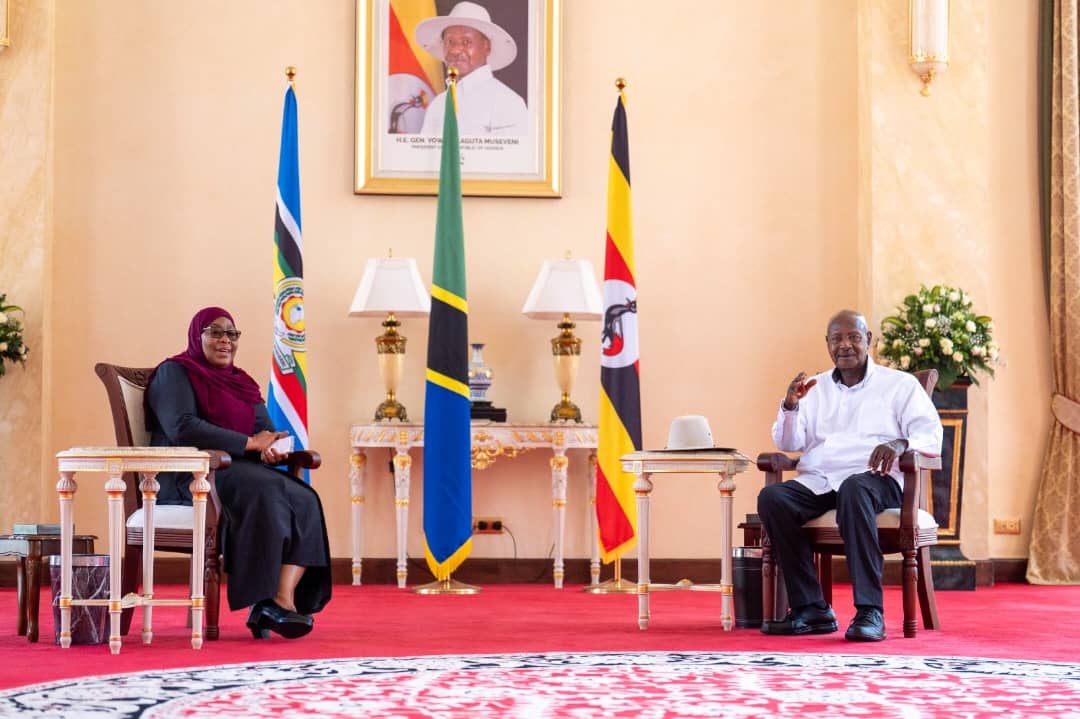 H.E MUSEVENI AND H.E SAMIA SEAL THE OIL DEAL: EACOP 93.9% DONE, SGR NEXT
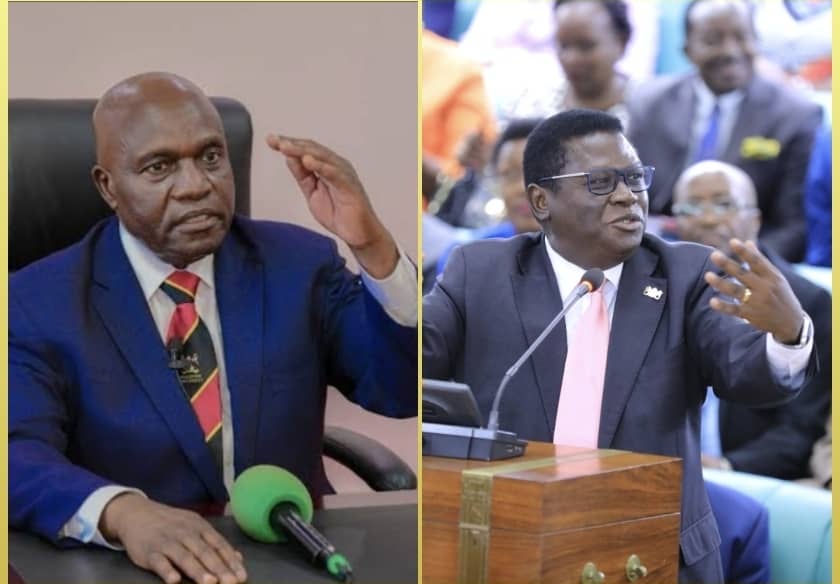 MAO TO MWENDA: You Cannot Beat People In Basements And Call It Transformation. Dr. KIYONGA Backs Him In Parliament.
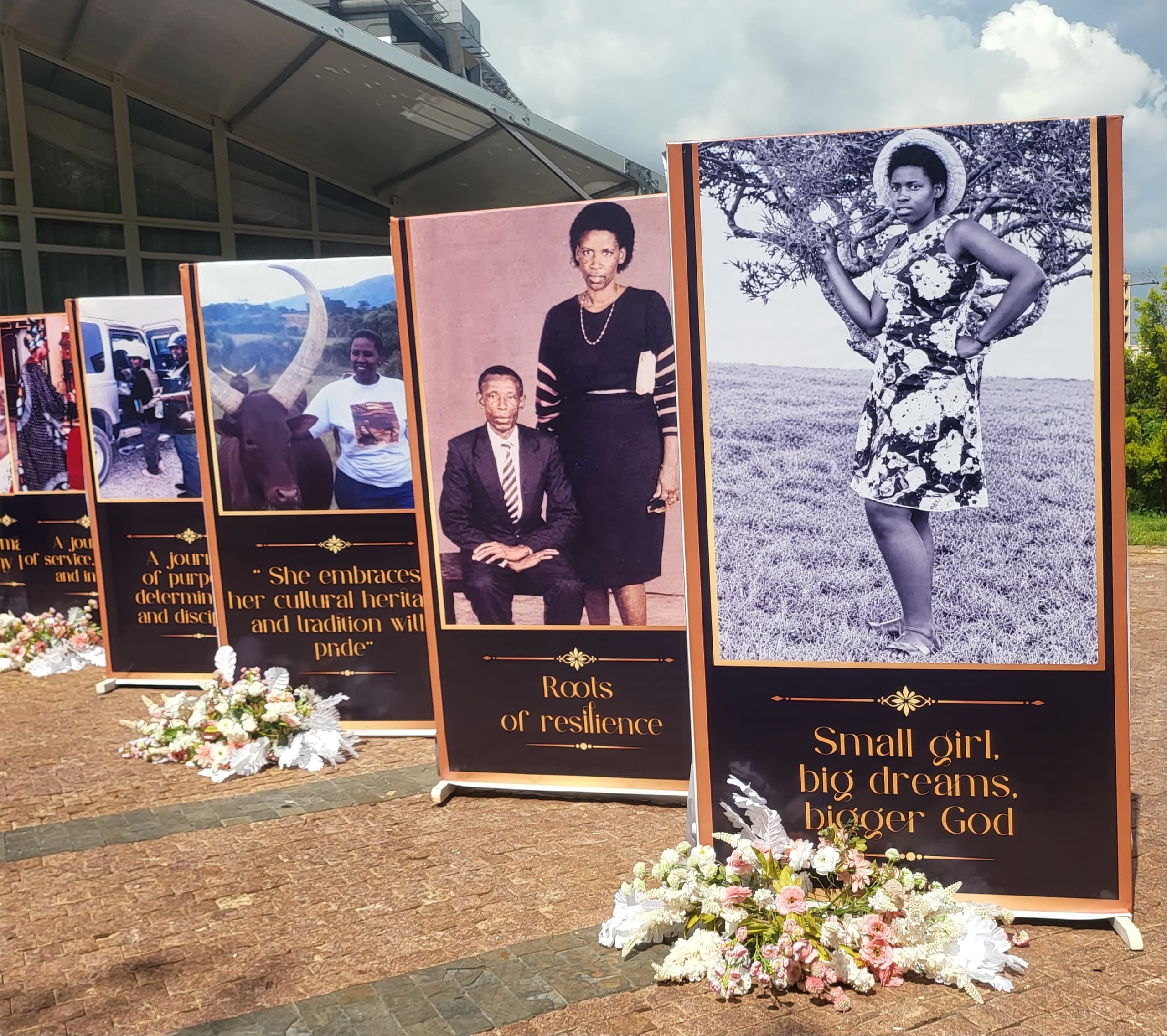 Dr. KELLEN KAYONGA: The Woman Who Needs No Title To Lead- Honoured At Glamorous Serena Dinner.
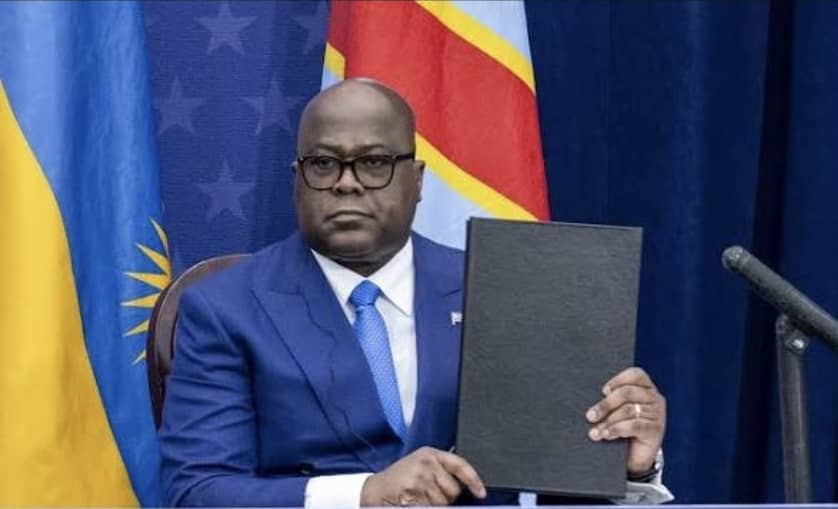 10 YEARS IN JAIL FOR RIGGING ELECTIONS: Who Will Punish The Powerful? Tshisekedi’s New Referendum Law Explained.
MAO TO MWENDA: You Cannot Beat People In Basements And Call It Transformation. Dr. KIYONGA Backs Him In Parliament.

By Musa Rwamigoye.
KAMPALA: Justice and Constitutional Affairs Minister Norbert Mao has disagreed with veteran journalist Andrew Mwenda’s apparent defence of using brutal methods against suspects in the name of socio-economic transformation, warning that Uganda cannot achieve development by abandoning the rule of law.
His position was on Tuesday echoed in Parliament by Deputy Prime Minister Crispus Kiyonga, who defended the NRM government and President Yoweri Kaguta Museveni against blanket accusations by Leader of Opposition Joel Ssenyonyi that torture and human rights violations had become the modus operandi of the Government of Uganda.
Mao said arguments that people could be knocked out in basements to accelerate national transformation were unacceptable under the existing legal framework, insisting that anyone advocating such methods must first confront the constitutional and legal implications.
Speaking at the Uganda Media Centre on Wednesday, Mao said Uganda cannot selectively abandon the law whenever those in power consider it necessary to achieve particular objectives.
“Knocking them out in the basement as the way to get Uganda to achieve socio-economic transformation is illegal. That’s his view. And there should be other views to contend with that view. But there is no compromise on obeying the law,” Mao said.
He argued that governments which wish to undertake extraordinary measures outside the normal legal framework must operate under constitutionally recognised circumstances, including declaring a state of emergency.
“There are those who have tried to transform society through means that are unlawful, through suspension of laws. But you can only do that if you declare a state of emergency, which is also lawful,” he said.
The minister maintained that until such extraordinary circumstances are lawfully declared, all government agencies and security arms must operate within existing laws.
“As of now, we must abide by the law,” he emphasised.
I Am A Linesman, Museveni Is The Referee.
Mao distanced himself from the actual enforcement powers of security agencies, describing his position in government as that of a linesman in a football match rather than the referee empowered to punish offenders.
“My role as Minister of Justice is similar to that of a linesman. I have a flag. I don’t have a whistle, I don’t have red and yellow cards. I don’t even draw the boundaries of the pitch,” Mao explained.
According to him, his responsibility is to raise concerns whenever he notices violations, leaving President Museveni, whom he likened to the referee, to make the necessary interventions.
“If I raise my flag, it’s the duty of the referee to blow the whistle and, if necessary, to penalise those who have flouted the rules of the tournament. In this case, the President is the referee,” he said.
Mao added that he hoped journalists would have an opportunity to put questions about the controversial security practices directly to President Museveni, rather than asking him to answer questions not meant for him.
Basements And Safe Houses.
His remarks come amid growing public controversy over alleged secret detention facilities, popularly known as basements, and accusations of torture and unlawful detention involving security operatives, where opposition politicians and supporters are detained and allegedly tortured, on orders alleged to be from powerful individuals.
On the alleged safe houses, Mao distinguished between officially recognised detention facilities and what he called illegal torture chambers.
He said safe houses could be used for detention arrangements involving particular suspects, including prominent individuals who might not necessarily be taken to conventional prisons, but insisted that such facilities must be known and operate within the law.
“Even the so-called safe houses must be known. They have to be known that this is a safe house,” he said.
However, he drew a distinction between such facilities and torture chambers, which he said are illegal under Uganda’s laws.
“The idea of torture chambers, those ones are all illegal under our laws,” Mao said.
Habeas Corpus Is For Abantu Bawansi.
He also explained the legal significance of habeas corpus, a court procedure through which authorities are required to produce a detained person before court and explain the legal basis for their arrest and detention.
Mao said the principle was specifically designed to protect vulnerable citizens, _abantu bawansi_, against abuse of power by stronger institutions and individuals.
He warned that people should not be arrested and held in undisclosed locations, arguing that Ugandans must be able to establish where their detained relatives are being held.
He further clarified that obtaining a habeas corpus order does not automatically mean that a suspect has been declared innocent or cleared of the charges against them.
Rather, he explained, the order requires authorities to account for the person and justify the circumstances surrounding their arrest and detention.
KIYONGA: Torturers Are Not Working For Museveni.
In Parliament on Tuesday, Deputy Prime Minister Crispus Kiyonga, a close Museveni ally since the days of UPM in the 1980s, asserted that he knows the NRM very well and historically the Museveni-led political movement has always been against human rights violations.
He said it was on account of this that Gen Museveni led others to the bush in the 1980s to end torture and other forms of misrule.
Accordingly, Kiyonga asserted that whoever violates the rights of others, including subjecting them to torture in the basement, cannot be working to engender the interests of Gen Museveni or even the NRM, the way he knows both.
Kiyonga was standing in for his boss Robinah Nabbanja, the Leader of Government Business.
His words enthused MPs on the opposition side, whose head Joel Ssenyonyi praised him for the maturity with which he was conducting business on the floor of Parliament.
Ssenyonyi reminisced how Kiyonga had recently disarmed him with his humility when he walked over to his office to have a private talk about the state of the human rights situation in the country.
Deputy Speaker Thomas Tayebwa, who was the day’s presiding officer, commended Kiyonga and Ssenyonyi for forging such a harmonious working relationship. Tayebwa said it is through such engagements that lots of common ground can be forged as leaders work towards finding solutions to the common problems of the Ugandan people.
Ssenyonyi Raises Fresh Arrests.
Ssenyonyi had earlier asked hard questions regarding why activists like David Musiri and political pundit Leonald Egesa had been kept incommunicado for longer than 48 hours.
Ssenyonyi said this is consistent with the fears he raised recently when he told the same plenary that as Internal Affairs Minister Prof Ephraim Kamuntu was promising remedy for political prisoners, many more fresh arrests were potentially going to be committed.
While urging Opposition Whip Paul Mwiru to be calm, Tayebwa called upon opposition leaders to be patient and have trust in Kiyonga.
As part of his submission condemning those things of taking people to the basement, among other human rights violations, Dr Kiyonga demanded that the Speaker expedite the organising of a special plenary session dedicated to exhaustively discussing the human rights situation in the country, so that people’s representatives can get a platform to pronounce themselves in defence of ordinary Ugandans’ right not to be tortured.
Leave a Comment
Your email address will not be published. Required fields are marked *