 SHS296M GONE? NDA Spokesman Abiaz Rwamwiri, Faces Court Over Fake Accountabilities.
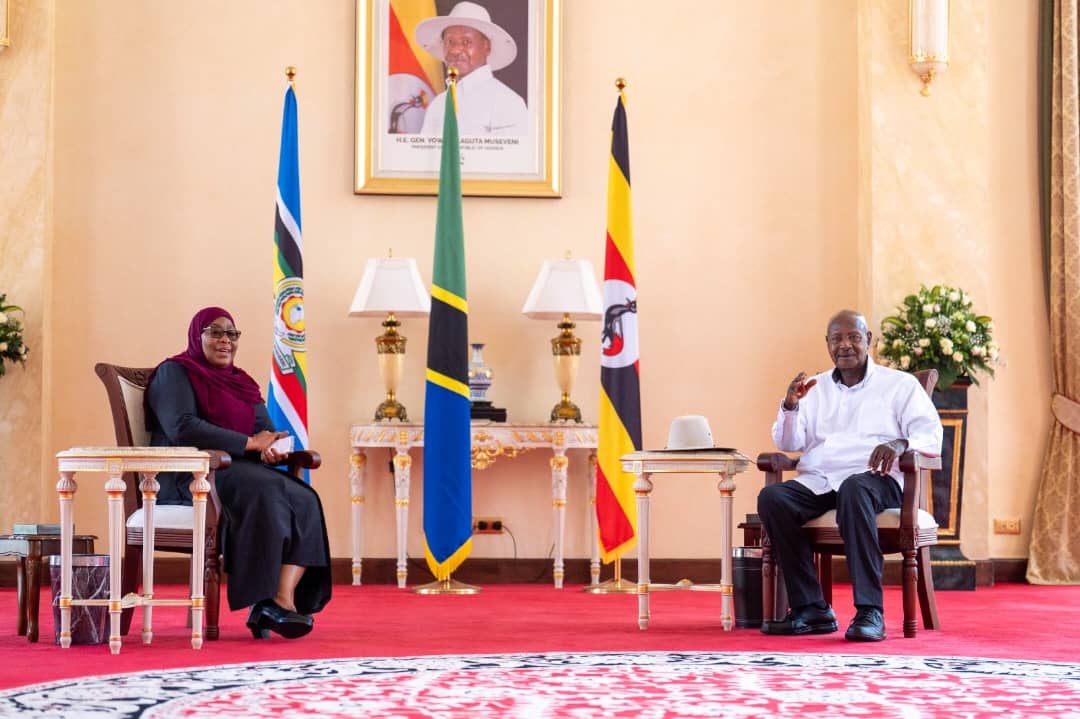 H.E MUSEVENI AND H.E SAMIA SEAL THE OIL DEAL: EACOP 93.9% DONE, SGR NEXT
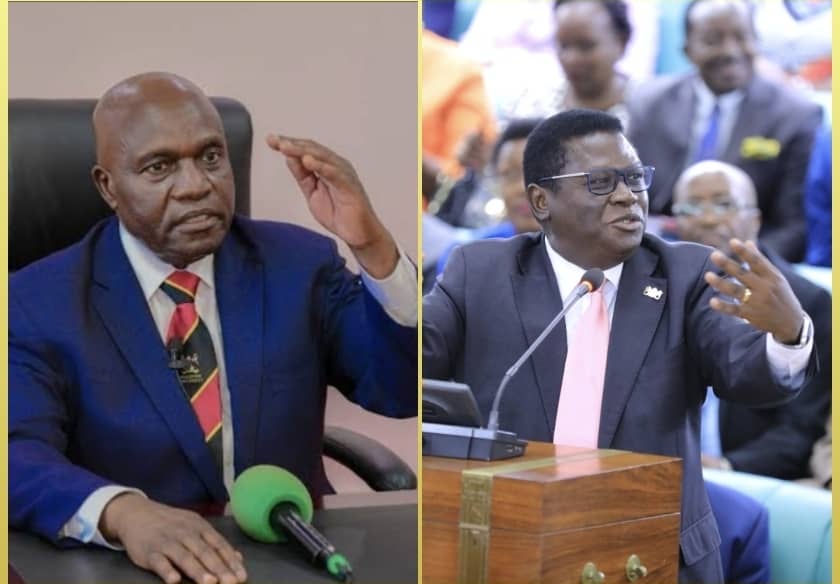 MAO TO MWENDA: You Cannot Beat People In Basements And Call It Transformation. Dr. KIYONGA Backs Him In Parliament.
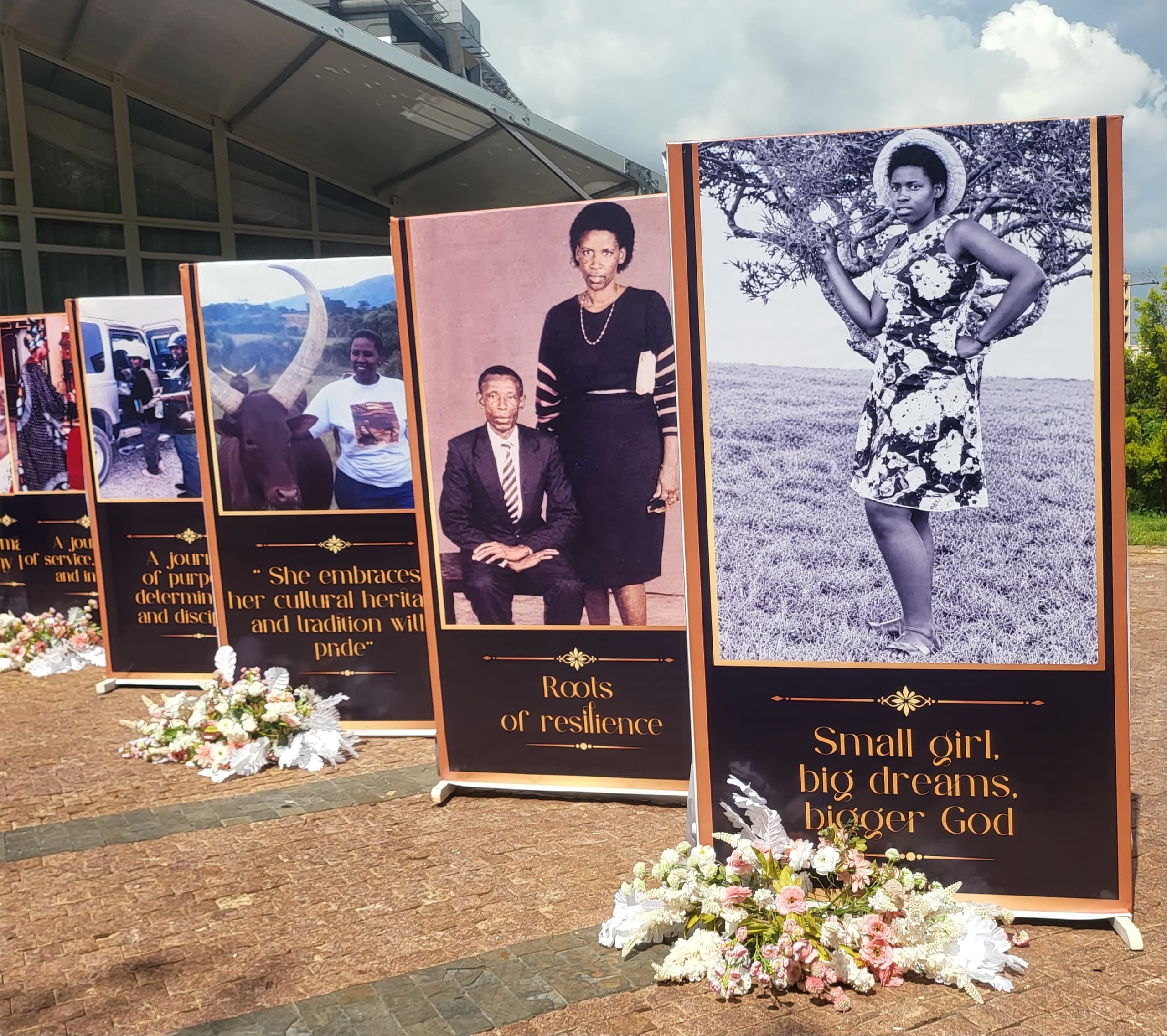 Dr. KELLEN KAYONGA: The Woman Who Needs No Title To Lead- Honoured At Glamorous Serena Dinner.
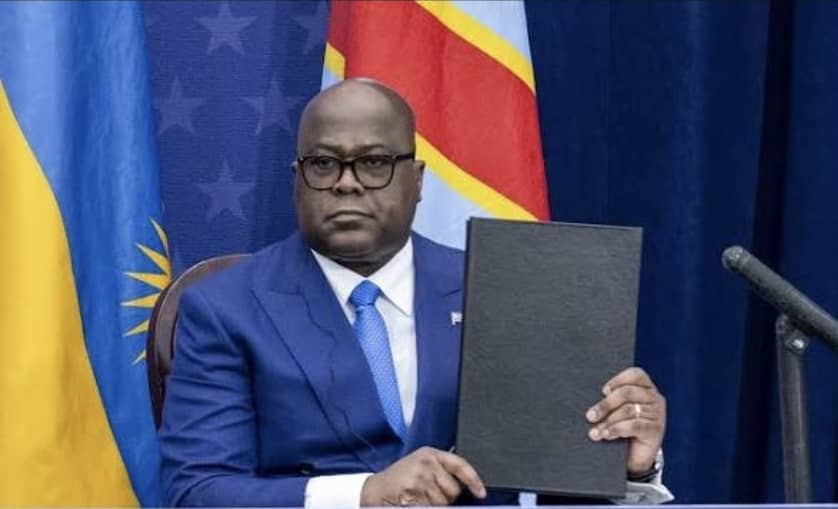 10 YEARS IN JAIL FOR RIGGING ELECTIONS: Who Will Punish The Powerful? Tshisekedi’s New Referendum Law Explained.

By Musa Rwamigoye.
KINSHASA: Democratic Republic of Congo President Félix Tshisekedi has promulgated a new law governing the organisation of referendums, laying the legal groundwork for nationwide votes amid controversy over proposed constitutional reforms and fears that he could seek to extend his stay in power.
Law No. 26/045, signed by Tshisekedi on November 9, 2026, and published in the Official Gazette on November 12, invokes the constitutional principle that national sovereignty belongs to the people.
“All power emanates from the people, who exercise it either directly through referendums or elections, or indirectly through their representatives,” the legislation’s explanatory memorandum states.
The document says the Constitution gives lawmakers the authority to determine the conditions for the organisation of elections and referendums, providing the basis for the new legislation.
It describes Congo’s previous referendum law, enacted on June 22, 2005, during the country’s democratic transition, as outdated and unsuited to the current context.
The previous legislation, the document explains, was primarily intended to facilitate the adoption of a new Constitution following years of political instability and armed conflict.
“It essentially aimed to enable the adoption, through direct universal suffrage, of the said draft Constitution, which became the Constitution of February 18, 2006,” the memorandum states.
“Furthermore, it did not encompass all the subjects of the referendum mechanism.”
Constitutional Reform And The Term-Limit Question.
The promulgation of the new law comes amid growing political tensions over Tshisekedi’s push for constitutional reforms, which opposition leaders fear could pave the way for him to seek a third presidential term.
Tshisekedi, who succeeded Joseph Kabila in January 2019 and secured re-election in December 2023, is constitutionally limited to two five-year presidential terms.
The explanatory memorandum traces the origins of Congo’s existing referendum framework to the country’s transition towards democratic governance.
It says the 2005 law was adopted in the context of the transition of the country towards a democratic state, with a view to the popular approval of the draft Constitution of the Third Republic, prepared and adopted by the transitional Parliament.
Congolese citizens approved that Constitution in a referendum held on December 18 and 19, 2005, laying the foundation for the country’s post-war political order.
The new law expands the legal framework beyond the circumstances that led to the adoption of the 2006 Constitution.
The memorandum indicates that referendums may cover matters including territorial changes and the approval of a draft, a proposal or a petition for constitutional revision.
The provision is particularly significant given the ongoing debate over Tshisekedi’s constitutional reform agenda.
Article 220 of Congo’s existing Constitution explicitly prohibits amendments to the number and duration of presidential terms, a safeguard introduced to prevent presidents from extending their stay in power.
However, opposition politicians fear that replacing the Constitution entirely, rather than amending individual provisions, could provide a mechanism for resetting presidential term limits.
Tshisekedi has previously argued that the existing Constitution contains weaknesses that hinder effective governance and should be reviewed to reflect the country’s realities.
Opposition figures, including Martin Fayulu, have accused the president of seeking to undermine democratic safeguards through constitutional reform.
The new referendum law does not itself amend the Constitution or extend Tshisekedi’s mandate, but it establishes the legal framework through which constitutional proposals could be submitted to Congolese voters.
Tough Penalties For Interference And Fraud.
The legislation introduces stringent penalties against individuals who interfere with referendum campaigns, obstruct voting or manipulate results.
It criminalises attempts to prevent political gatherings or the expression of opinions during referendum campaigns.
“Anyone who obstructs or attempts to prohibit or bring to an end any demonstration, gathering or expression of opinions during the referendum campaign” faces up to 12 months in prison, a fine of between five million and 10 million Congolese francs, or both, the law states.
Article 35 similarly provides penalties for anyone who destroys posters, photographs or other referendum propaganda materials.
Polling officials who abandon their duties without legitimate justification also face prosecution.
“Any member of a polling station who, without legitimate reason, refrains from performing the duties entrusted to him” faces imprisonment of between six months and one year, alongside a possible fine.
Article 36 further doubles the penalties for polling officials who, under the pretext of claiming their rights, destroy or confiscate voting materials assigned to their polling stations.
Under Article 37, polling officials who obstruct the voting process face even tougher sanctions.
“Any member of a polling station who, without valid reason, delays the start of voting or interrupts it” faces between two and five years in prison, a fine of between 10 million and 100 million Congolese francs, or both.
Vote Manipulation.
The legislation also imposes severe penalties on individuals involved in electoral fraud.
Anyone who falsifies the vote-counting record or the official record of the referendum or knowingly destroys a ballot paper before the end of the voting operation faces between five and 10 years in prison, fines of between 10 million and 50 million Congolese francs, or both.
The law adds that offenders shall be deprived of their voting rights and eligibility for election for a period of six years.
Article 47 criminalises the counterfeiting of ballot papers, stipulating that the offence shall be punished in accordance with provisions of the Congolese Penal Code governing forgery.
The legislation also provides for the prosecution of ordinary criminal offences committed during referendum operations, even where those offences are not specifically covered by the new law.
A History Of Disputed Votes, Fraud And Bloodshed.
Congo has never had an election that all sides accepted as free and fair. Every presidential vote since 2006 has been followed by accusations of rigging, violence, and criminality around the ballot.
1. Kabila Era: 2006.
Joseph Kabila won the first democratic election in 2006 against Jean-Pierre Bemba. The run-off was followed by heavy fighting in Kinshasa between their private armies that killed more than 100 people.
Human Rights Watch later documented that in the two years after that election, state security forces killed an estimated 500 perceived opponents and detained about 1,000 more, many of whom were tortured, in a campaign to crush political space.
2. Kabila Era: 2011.
The 2011 election was even more violent. Kabila was declared winner with 49% against Etienne Tshisekedi.
The Carter Center reported serious irregularities, including the loss of nearly 2,000 polling station results in Kinshasa, and several polling stations in Katanga logging 99% or 100% turnout, almost all for Kabila, while national turnout was only 58%.
In one Katanga district, turnout was recorded at 100.14%, with Kabila winning 99.98% of votes.
A UN investigation documented the killing of at least 33 people in Kinshasa by security forces between 26 November and 25 December 2011, at least 83 wounded mostly by bullets, at least 16 people unaccounted for, and more than 265 people arrested, most arbitrarily detained. There was consistent, corroborated testimony of torture in detention.
Most violations targeted people because of their real or perceived affiliation to Etienne Tshisekedi’s opposition party.
On polling day itself, gunmen attacked a polling station in Lubumbashi, killing two policemen and burning ballots, while riot police fired bullets and tear gas at supporters of Etienne Tshisekedi, killing at least three people.
3. Kabila To Tshisekedi Transition: 2018.
Kabila was constitutionally barred from running again in 2016, but delayed the vote for two years in what Congolese called _le glissement_, the sliding of his mandate.
When the election finally happened on 30 December 2018, CENI declared Felix Tshisekedi winner with 38.6%, ahead of Martin Fayulu. Leaked CENI data and 40,000 Catholic Church observers indicated Fayulu had in fact won with around 60%, while Tshisekedi had around 19% and Kabila’s candidate Emmanuel Shadary also around 19%.
Fayulu called it an electoral coup and accused Kabila of handing Tshisekedi the presidency in exchange for a power-sharing deal that would let Kabila keep control of parliament, governors and security forces.
On polling day, a police officer shot dead a young man in South Kivu after a dispute over alleged voting fraud. The crowd then beat the officer to death, and an election official was also killed.
CENCO said voting machines had malfunctioned in at least 544 of 12,300 polling places it monitored, and Tshisekedi’s campaign accused polling station heads of voting several times for Shadary.
The Constitutional Court, then dominated by Kabila appointees, upheld the result.
4. Tshisekedi Era 2023.
Tshisekedi’s re-election in December 2023 followed the same pattern, but on a larger scale.
CENI declared him winner with 73.34% of the vote, a figure observers called implausible because no previous incumbent had ever secured more than 48%, even with fraud allegations.
Voting, scheduled for 20 December, continued until 27 December in some areas, an extension the opposition said was illegal. CENI never provided a breakdown of votes by polling station.
The Catholic Bishops Conference, CENCO, called the elections an electoral disaster, characterised by fraud, large-scale corruption, vandalism of electoral material, incitement to violence, illegal detention of electronic voting devices, buying of consciences, and attacks on human rights and human life.
CENCO found 3,706 polling stations duplicated 2 or even 3 times, inflating voter numbers by more than 2,400,000, and discovered voting machines in private homes.
At least 19 people were killed in election-related violence in the run-up to the vote, while at least 34 people had been killed and 59 wounded in protests related to the vote, according to the United Nations.
Two parliamentary candidates were killed in separate incidents on 15 December.
The government refused to accredit observers from the European Union and the East African Community, limiting independent monitoring.
CENI later invalidated 82 candidates for fraud and corruption, but refused a joint independent inquiry into the process.
Why This Matters Now.
The new Law No. 26/045 introduces prison terms of up to 10 years for falsifying results, destroying ballots and obstructing voting. Critics say the law targets exactly the crimes documented in 2006, 2011, 2018 and 2023, but without independent courts and an independent CENI, it may punish opposition protesters and polling staff more than the powerful figures who have historically benefited from the fraud.
War In Eastern Congo Casts Shadow Over Vote.
The constitutional debate comes as Tshisekedi’s administration struggles to regain control of territories in eastern Congo seized by the Rwanda-backed M23 rebel movement.
The conflict has displaced millions of people, strained public finances and heightened tensions between Kinshasa and Kigali.
The security crisis has also raised questions about the government’s ability to organise nationwide elections in 2028, particularly in areas under rebel control.
Opposition politicians have warned against using the conflict or constitutional reforms to justify an extension of Tshisekedi’s presidency.
The new referendum legislation repeals all previous provisions that contradict it.
“All previous provisions contrary to this law are hereby repealed,” Article 49 states.
Article 50 stipulates: “This law enters into force on the date of its promulgation.”
The legislation was signed in Kinshasa by Tshisekedi on November 9, formally bringing it into force.
No date has been announced for a constitutional referendum, and the government has yet to formally submit a new Constitution to voters.
Related Post

Leave a Comment
Your email address will not be published. Required fields are marked *