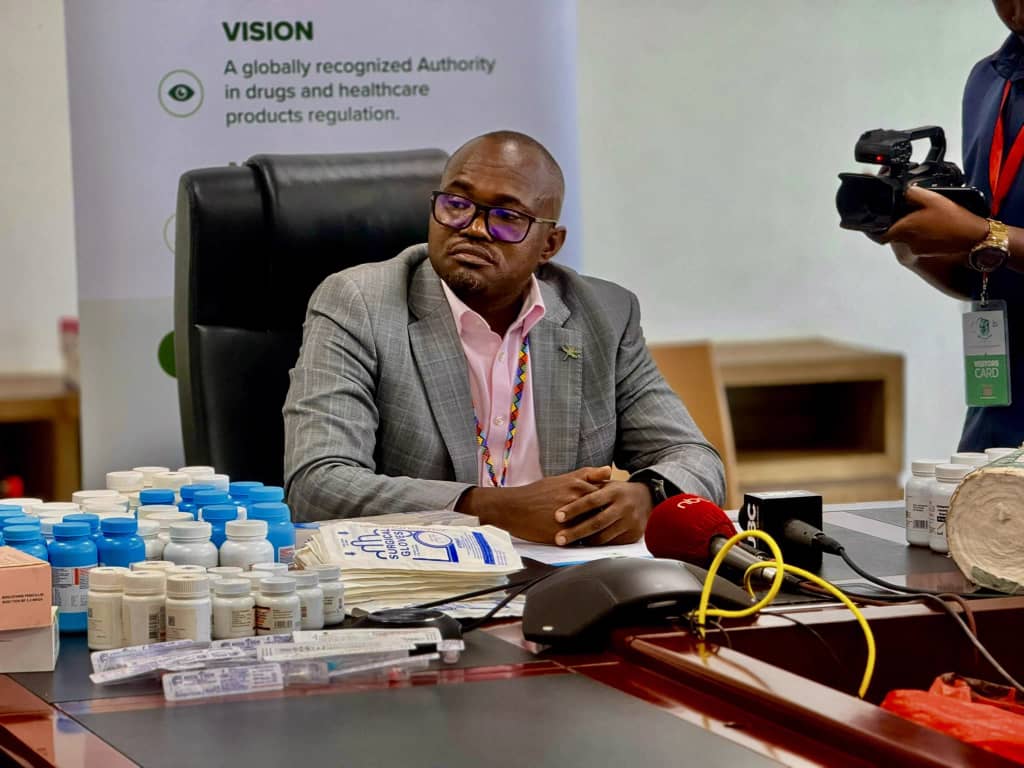
 SHS296M GONE? NDA Spokesman Abiaz Rwamwiri, Faces Court Over Fake Accountabilities.
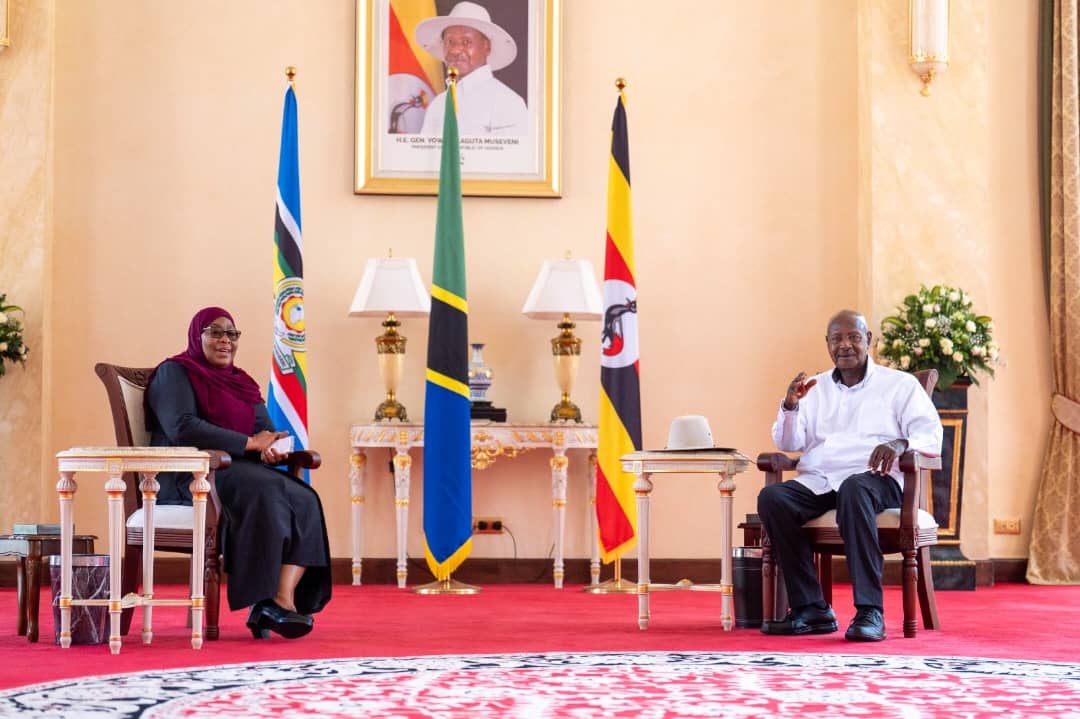 H.E MUSEVENI AND H.E SAMIA SEAL THE OIL DEAL: EACOP 93.9% DONE, SGR NEXT
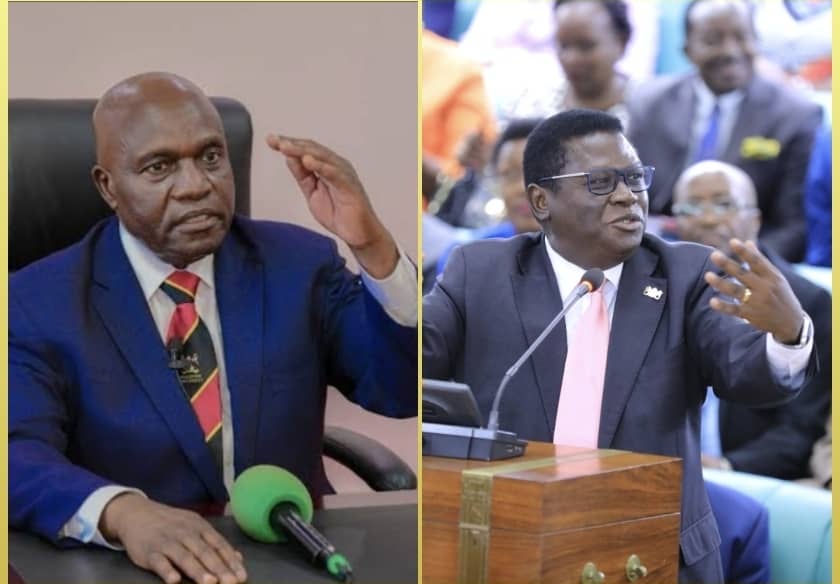 MAO TO MWENDA: You Cannot Beat People In Basements And Call It Transformation. Dr. KIYONGA Backs Him In Parliament.
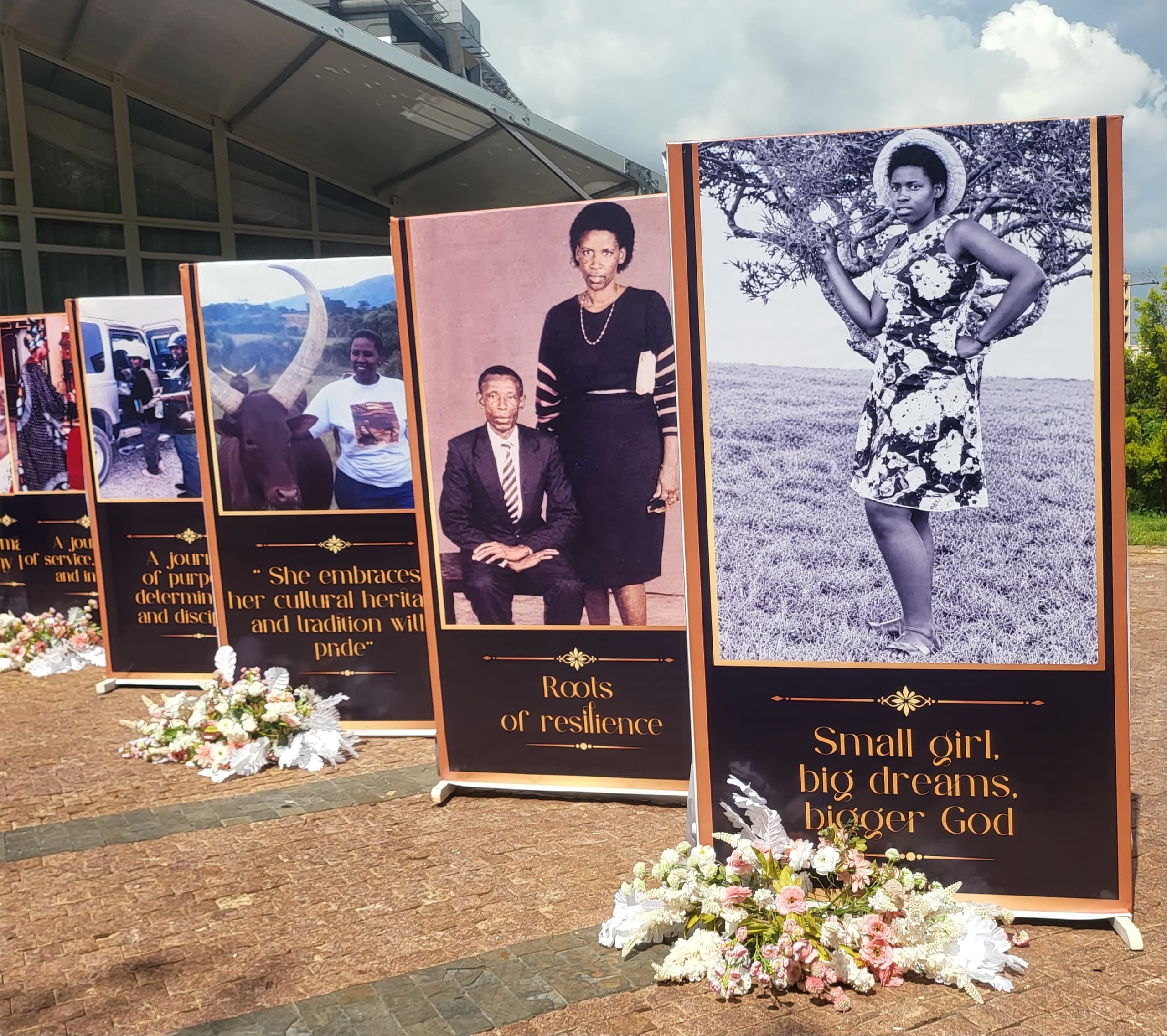 Dr. KELLEN KAYONGA: The Woman Who Needs No Title To Lead- Honoured At Glamorous Serena Dinner.
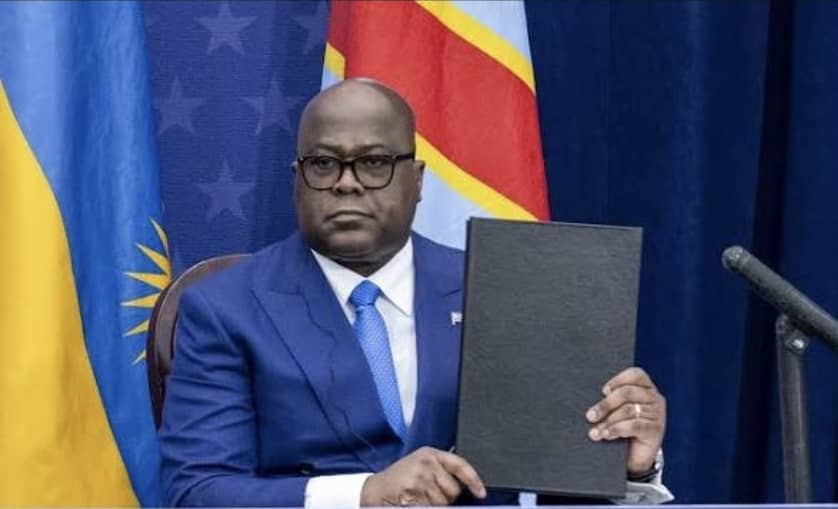 10 YEARS IN JAIL FOR RIGGING ELECTIONS: Who Will Punish The Powerful? Tshisekedi’s New Referendum Law Explained.
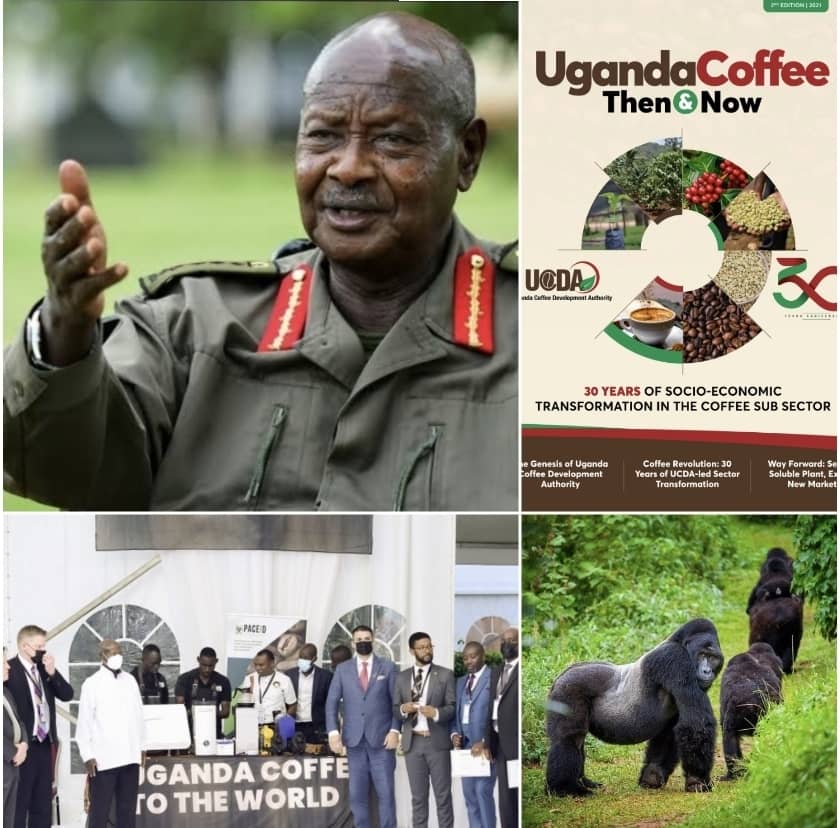
COFFEE, OIL & PEACE: The Three Forces Taking Uganda to Second World.
By Musa Rwamigoye.
How Museveni’s Peace, Saleh’s Wealth Plan, Rwabwogo’s Exports, Mugira’s NEC and Rujoki’s URA are Making Uganda Rich by 2031.
For decades, Uganda was described in the language of limitation, a developing country, a landlocked economy and a nation recovering from wars.
By 2031, if the current trajectory holds, that language will have to change.
A convergence of powerful forces of coffee, tourism, the Uganda Oil Refinery, and President Yoweri Museveni’s long-standing emphasis on peace and stability is quietly transferring Uganda from the developing world into what economists call the Second World club “a middle-income, industrialising, self-reliant economy”.
This is not a slogan but a structural shift already visible in export figures, in investor confidence, and in the changing lives of millions of Ugandans.
Behind that shift are now four operational engines turning policy into money. Gen. Salim Saleh’s wealth-creation architecture, Odrek Rwabwogo’s PACEID, Lt. Gen. James Mugira’s NEC, and John Musinguzi Rujoki’s URA.
1. PEACE AS THE FOUNDATION, THE MUSEVENI DOCTRINE.
Our economic story in Uganda begins in 1986, when H.E Yoweri Kaguta Museveni took power Uganda was a failed state, shattered by war, collapsed institutions, hyperinflation, and a shattered private sector.
His long-standing emphasis on peace, stability, and strategic leadership became the foundational anchor for Uganda’s economic recovery and transformation.
Peace was not treated as an abstract ideal. It was treated as economic infrastructure.
Without guns silenced, there would be no roads. Without roads, no markets. Without markets, no coffee exports. Without stability, no investor would risk capital in oil, tourism, or manufacturing.
Forty years later, that doctrine has delivered what few African nations have sustained: uninterrupted political stability, a growing middle class, and a state capable of planning beyond the next election cycle.
It is on that foundation that coffee, tourism and oil are now rising.
2. MUSEVENI’S TRADE POLICY OF STOP EXPORTING POVERTY, START EXPORTING VALUE.
At the heart of Uganda’s transformation is a clear, consistent economic trade policy from President Museveni.
President Museveni has always advocated for an end of the historical pattern of exporting unprocessed raw materials.
For over a century, Africa and Uganda in particular has exported raw materials and imported back finished products at ten times the price. We export coffee beans and import Nescafé. We export hides and import shoes. We export cotton and import shirts and dresses . We export crude oil and import petrol.
H.E Museveni has called this “exporting jobs, exporting wealth, and importing poverty”.
His trade policy reverses that logic on three fronts.
a) Local Value Addition First.
No raw material should leave Uganda unprocessed if it can be processed at home. Coffee must be roasted, packaged and branded in Uganda. Milk must become yoghurt, cheese and powder. Beef must become packaged, certified exports. Minerals must become finished products.
b) Regional Integration.
Through the East African Community and the African Continental Free Trade Area (AfCFTA), Uganda must trade first with its neighbours, build regional value chains, and stop depending solely on distant markets that dictate prices.
c) Expanded Global Market Access.
Uganda must not beg for markets. Instead Uganda must negotiate, compete, and sell finished, branded Ugandan products in Europe, the Gulf, Asia, and America, on Uganda’s terms.
The coffee example exposes the injustice and the opportunity most clearly.
Raw coffee is roughly $2.50 per kilogram but processed, roasted, branded coffee goes up to $40 per kilogram.
That is a 16-times difference. The farmer who sells raw beans earns $2.50 but the foreign company that roasts, packages and brands it earns $40.
H.E Museveni’s question is simple. Why should Uganda remain at $2.50 when it can claim $40?.
That single question explains the whole 2031 strategy. Every policy from Saleh’s production, to Rwabwogo’s exports, to Mugira’s factories, to Rujoki’s revenue collection is designed to move Uganda from the $2.50 economy to the $40 economy.
Value addition is not just an economic policy. For Museveni, it is a sovereignty policy. A country that cannot process what it produces can never be independent.
3. THE IMPLEMENTERS: SALEH AND RWABWOGO TURN VISION INTO EXPORTS.
Vision without implementation is just a speech. In Uganda today, implementation has two names.
Gen. Caleb Akandwanaho a.k.a Salim Saleh the Wealth Creation Strategist.
From Operation Wealth Creation (OWC) to the Parish Development Model (PDM) and the current push for commercial agriculture, Gen. Saleh has been the chief architect of moving Uganda from subsistence to commercial production.
His measures are practical, not theoretical.
- Organising farmers into production clusters so smallholders can aggregate, negotiate, and supply consistently
- Linking production to markets ensuring coffee, fruits, dairy and other products have buyers before they are planted
- Pushing irrigation, inputs and mechanisation to move households from one-acre survival farming to commercial enterprises
- De-risking private sector investment by using government coordination to unlock land, logistics and financing
Gen Saleh’s argument is simple. Uganda cannot become Second World while 70% of its people still farm for survival. Wealth must be created at household level first, then aggregated to national level.
If we have enough raw materials, Uganda can attract many investors because Uganda is secure in terms of peace and security, enough power, enough water bodies, land and best weather .
Odrek Rwabwogo, Chairman PACEID the Export Commander.
If Gen. Saleh builds production at home, Rwabwogo sells Uganda to the world.
Under PACEID, the Presidential Advisory Committee on Exports and Industrial Development, Rwabwogo has advanced a clear implementation framework.
The 4 Pillars of PACEID.
- Market Access. Opening new markets in Europe, Middle East, Asia and Africa for coffee, tea, dairy, beef, fish, and horticulture.
- Standards & Compliance. Helping Ugandan exporters meet EU, US and Gulf standards from SPS, traceability, and certification to packaging.
- Value Addition. Shifting Uganda from exporting raw beans, raw hides and raw fruits to exporting finished, branded products.
- Export Financing: Working with banks, UDB, and development partners to unlock affordable export credit, trade finance and export insurance
.The $6 Billion Export Target.
PACEID has set an ambitious national target to grow Uganda’s exports from under $4 billion to $6 billion and beyond, with coffee as the lead product but supported by 13 priority products including beef, dairy, avocado, banana, and tourism services.
The Trade Missions.
Through PACEID-led trade missions to Serbia, UAE, Egypt, China, Italy and the Balkans, Uganda has secured direct buyers, off-takers, and joint ventures bypassing middlemen who for decades captured most of the value.
Together, Saleh and Rwabwogo represent the two halves of Museveni’s economic doctrine.
Produce more at home, sell more abroad but sell it processed, not raw.
4. THE BUILDERS AND THE COLLECTORS: MUGIRA AND RUJOKI EXPAND THE PARAMETERS.
A country does not become Second World on exports alone. It needs someone to build the infrastructure and someone to collect the revenue to pay for it. That is where Lt. Gen. Mugira and Musinguzi Rujoki come in.
Lt. Gen. James Mugira, CEO National Enterprise Corporation (NEC). The Nation Builder.
Under Lt. Gen. Mugira, NEC the business arm of the UPDF has transformed from a military commercial entity into a national development engine.
Afande Mugira has expanded the parameters of Uganda’s economic transformation in three critical ways.
a) Building What Uganda Needs to Grow.
NEC is now at the centre of construction, engineering, and manufacturing from roads, bridges, and army barracks to industrial facilities, water systems, and agricultural mechanisation. Through NEC Construction, NEC Uzima Water, and NEC Agro, the Corporation is lowering the cost of infrastructure and proving that Uganda can build for itself, instead of always importing contractors.
b) Driving Agro-Industrialisation.
NEC has invested heavily in large-scale agriculture, livestock, and agro-processing aligning directly with Saleh’s wealth creation agenda and PACEID’s export agenda. By producing seed, fertiliser, and mechanisation services, NEC is helping commercialese the very farmers who grow Uganda’s coffee and food.
c) Proving State Enterprises Can Work.
Afande Mugira’s NEC has shown that a disciplined, well-managed state enterprise can be profitable, efficient, and patriotic generating jobs, retaining skills in Uganda, and reinvesting profits into national development. That is a key test of Second World status whereby a country that can run its own industries, not just privatise them.
In short, if Gen. Saleh organises production and Rwabwogo finds markets, Mugira builds the factories, roads and systems that make it all possible.
John Musinguzi Rujoki, Commissioner General URA. The Revenue Architect.
No country reaches Second World status if it cannot finance its own budget. That is Rujoki’s battlefield.
Since taking over the Uganda Revenue Authority (URA), Musinguzi Rujoki has played a decisive role in expanding Uganda’s fiscal parameters.
a) Widening the Tax Base Without Crushing Business.
Through digitalisation and application of EFRIS, Digital Tax Stamps, and data-driven compliance, URA has brought thousands of previously informal businesses into the tax net, while making it easier for compliant businesses to pay.
b) Record Revenue Growth.
URA’s revenue collections have grown year after year, crossing the UGX 30 trillion mark and pushing Uganda’s tax-to-GDP ratio upwards. That money is what funds roads, schools, hospitals, the Parish Development Model, and the oil infrastructure.
c) Fighting Smuggling, Corruption and Leakages.
Rujoki has led a crackdown on smuggling, under-declaration, and customs fraud, especially at border points and in the oil, coffee, and manufacturing sectors ensuring that the wealth Uganda produces stays in Uganda.
d) Making URA a Partner, Not a Punisher.
Under Rujoki, URA has shifted from pure enforcement to taxpayer education, voluntary compliance, and support for exporters including tax refunds and incentives that directly help PACEID exporters compete globally.
His logic is clear. Coffee brings dollars. Oil brings trillions. But it is URA that turns those dollars and trillions into schools, roads, hospitals and national sovereignty.
NB. Without Mugira’s NEC building and Rujoki’s URA collecting, the 2031 dream would remain a speech. With them, it becomes a budget.
5. COFFEE: UGANDA’S GREEN GOLD GOES GLOBAL.
Coffee is no longer just a cash crop. It is now a major pillar of Uganda’s economy, driving record-breaking export revenues, supporting millions of livelihoods, and shifting decisively toward domestic Industrialisation and value addition.
Uganda has cemented its status as one of Africa’s top coffee exporters, surpassing 8.3 to 8.7 million 60kg bags in a single season.
The result: roughly US$2.2 billion to US$2.4 billion in annual export revenues. Coffee now accounts for nearly one-third of the country’s total export earnings.
But the real revolution is not in volume but it is in value.
For decades, Uganda exported raw beans and imported back finished coffee at ten times the price. That era is ending.
Local investors like Nelson Tugume of Inspire Africa, working with the support of President Museveni, are championing value addition roasting, packaging, branding and exporting finished Ugandan coffee to the world.
This is exactly what PACEID is fighting for. Odrek Rwabwogo and his team at PACEID says that Uganda must not just grow coffee, it must own the coffee value.
H.E Museveni and Rwabwogo says the goal is simple. Let the farmer earn more, let Uganda keep more, and let the world taste Uganda, not just buy from Uganda.
That vision is now attracting international capital.
The Italian Head of Delegation is ready to finance the coffee sector especially small household farmers with 120 Million Euros in the next 3 months, once all administrative preparations are completed. The money will go to inputs, irrigation, and productivity, targeting the very households that grow over 80% of Uganda’s coffee.
At this stage, it is the coffee farmer who must benefit first. The €120 million investment is not about big speeches or big offices. It is about protecting the plantation from the two enemies that have broken farmers for generations: coffee diseases and drought.
With irrigation, inputs, and disease control, a farmer no longer watches his crop wither in a dry season or rot in a wet one. He harvests and earns regularly.
That is why model farmers like Kamukama Ishekindi and Kayeebe Herbert Makomba from Kashongi – Kiruhura matter. They have shown what discipline, good agronomy, and hard work can do even without full support.
Imagine what they will do once they are fully supported with irrigation.
They will not just survive drought, instead they will defeat it. They will not just fight disease instead they will prevent it. And their success will become a living classroom for thousands of other farmers across Uganda.
This is the true meaning of value addition. it starts not in the factory, but in the garden with a farmer whose plantation is protected, watered, and productive all year round.
Under Saleh’s wealth-creation model, that money will not be scattered. It will be channelled through organised farmer groups, cooperatives and PDM structures to ensure it reaches production, not consumption.
If implemented, it will be one of the largest single injections into Uganda’s agricultural transformation, turning smallholder farmers from subsistence growers into commercial producers.
6. TOURISM: UGANDA IS BACK, AND THE WORLD IS COMING
If coffee is Uganda’s green gold, tourism is its golden invitation to the world.
According to Uganda’s Ministry of Tourism, international arrivals reached 1.64 million in 2025, surpassing pre-Covid levels, while tourism receipts hit US$1.62 billion.
From the mountain gorillas of Bwindi to the source of the Nile, from Murchison Falls to the Rwenzoris, Uganda is finally converting its unmatched natural beauty into jobs, foreign exchange, and national pride.
PACEID has classified tourism as an export service not different from coffee. Under Rwabwogo’s framework, tourism is being marketed with the same discipline as a product. packaging, branding, standards, and direct selling to source markets in Europe, the Gulf, and Asia.
Tourism is Uganda’s most labour-intensive export. Every tourist that lands in Entebbe supports drivers, guides, hoteliers, farmers, craftsmen, and airlines.
With peace holding and infrastructure improving new roads, upgraded airports, and regional connectivity, Uganda is positioning itself not as an alternative safari destination, but as Africa’s premier destination.
The target for 2031 is clear: double arrivals, double receipts, and make tourism a $3 billion industry.
7. OIL: THE REFINERY THAT CHANGES THE EQUATION.
For years, Uganda’s oil was a promise on paper. Now it is becoming a project on the ground.
The Uganda Oil Refinery a planned 60,000-barrel-per-day crude oil refinery is the centrepiece of Uganda’s strategy to stop exporting raw wealth and start refining it at home.
Overall national oil and gas revenues combining upstream production, the East African Crude Oil Pipeline (EACOP), and taxes are projected to yield UGX 2.2 trillion in the 2026/27 financial year, with UGX 1.4 trillion budgeted for national development.
Crucially, the refinery’s value is not just in direct cash flow. Its real contribution is in fiscal retention and cost-saving.
Today, Uganda imports nearly all its refined petroleum products. Tomorrow, with its own refinery, Uganda will.
- Save billions in foreign exchange.
- Stabilise fuel prices.
- Create thousands of skilled jobs.
- Supply the region with refined products.
- Power its own Industrialisation.
Oil, handled correctly, will not make Uganda a rentier state. It will make Uganda an industrial state.
Gen. Saleh has consistently warned that oil must be used to finance production agriculture, industry, and infrastructure not consumption. That discipline is what separates countries that escape the oil curse from those that fall into it.
And it is URA under Rujoki that will ensure those oil revenues are properly taxed, accounted for, and channelled into the national budget not lost in leakages.
8. THE 2031 EQUATION: WHY SECOND WORLD IS NOW WITHIN REACH.
Coffee = $2.4 billion + value addition + 120M Euros in new investment.
Tourism = $1.62 billion + 1.64 million visitors and rising.
Oil = UGX 2.2 trillion + refinery + pipeline + industrial jobs.
Peace = 40 years of stability + investor confidence + long-term planning.
Implementation = Saleh’s Wealth Creation + Rwabwogo’s PACEID Export Drive + Mugira’s NEC Building + Rujoki’s URA Collecting.
Individually, each sector is powerful. Together, they are transformational.
The Second World is not defined by skyscrapers alone. It is defined by.
- A country that feeds itself and exports surplus.
- A country that adds value to what it produces.
- A country that earns foreign exchange from services, not just raw materials.
- A country that can finance its own development. from its own revenues.
- A country where stability is not an event, but a system.
THE CHALLENGE AHEAD
The path is not automatic. Uganda must still confront corruption, ensure oil revenues are transparently managed, protect the environment, invest in skills, and ensure coffee and tourism wealth reaches the rural farmer not just the urban elite.
But the fundamentals have shifted. For the first time since independence, Uganda is not betting on one commodity, one donor, or one project. It is betting on a diversified economy anchored in peace and driven by implementers who are measured not by speeches, but by exports, by buildings, and by revenue collected.
President Museveni provided the stability. Gen. Saleh is organising production. Rwabwogo and PACEID are opening markets. Lt. Gen. Mugira and NEC are building the nation. Musinguzi Rujoki and URA are financing it.
And if coffee, tourism and oil continue on their current path under the umbrella of peace, 2031 will not be the year Uganda dreams of the Second World, it will be the year it arrives there.
FOR GOD AND MY COUNTY.
Leave a Comment
Your email address will not be published. Required fields are marked *